
Understanding the role of a land agent can be crucial when navigating complex property transactions, particularly those involving government acquisitions, infrastructure projects, or development planning. While the term "land agent" might sound similar to a real estate agent, these professionals serve distinctly different functions within the property industry. This comprehensive guide explores what land agents do, how their work differs from traditional residential property services, and when their specialised expertise becomes essential for property owners and developers across Australia.
What Is a Land Agent and How Do They Differ from Real Estate Agents
A land agent specialises in managing land acquisition, access rights, and compensation negotiations, typically for infrastructure projects, government initiatives, or large-scale developments. Unlike residential real estate agents who focus on marketing and selling homes, land agents work primarily with government bodies, utility companies, and developers to secure land rights, negotiate easements, and manage compulsory acquisition processes.
The distinction matters significantly for property owners. While a real estate agent helps you sell your home on the open market to willing buyers, a land agent becomes involved when someone needs to acquire part or all of your property for public purposes. This might include road widening, utility installations, railway extensions, or other infrastructure developments.
Core Responsibilities and Expertise
Land agents bring specialised knowledge to complex property matters that extend well beyond standard residential transactions:
- Valuation and compensation assessment for partial land takings and easements
- Negotiation with government authorities and statutory bodies
- Rights of way and access arrangements for utilities and infrastructure
- Compulsory acquisition proceedings and compensation claims
- Environmental and planning compliance for development projects
Their work requires deep understanding of legislation, valuation principles, and negotiation tactics specific to non-market transactions. The International Right of Way Association provides comprehensive training on land acquisition principles that form the foundation of professional land agent practice.

When Property Owners Need Land Agent Services
Understanding when to engage a land agent versus a traditional real estate professional can protect your interests and ensure appropriate compensation. Several scenarios specifically require land agent expertise rather than standard real estate services.
Government Infrastructure Projects
When government authorities announce plans for new roads, railways, or public facilities that affect your property, a land agent becomes essential. These professionals understand the compulsory acquisition process, know how to challenge undervalued offers, and can negotiate fair compensation for both land taken and any resulting diminution in value to your remaining property.
The FHWA provides guidance on categorical exclusions and right-of-way acquisitions that illustrates the complexity of government land acquisition processes, even in straightforward projects.
Utility Easements and Access Rights
Electricity providers, telecommunications companies, and water authorities frequently require easements across private property. A land agent can:
- Assess the true impact on your property's value and future use
- Negotiate appropriate compensation beyond initial offers
- Ensure access conditions protect your interests
- Review legal documentation for unfavourable terms
- Coordinate with solicitors for proper legal protection
The UK government response on electricity network infrastructure demonstrates how utility access rights require specialist negotiation skills to balance public benefit with landowner compensation.
Land Valuation Principles for Acquisition and Compensation
Accurate valuation forms the cornerstone of fair compensation in land acquisition matters. Land agents employ sophisticated methodologies that account for factors rarely considered in standard residential appraisals.
| Valuation Component | Description | Impact on Compensation |
|---|---|---|
| Market Value | Unaffected sale price of total property | Base compensation amount |
| Special Value | Unique worth to current owner | Additional compensation |
| Disturbance Costs | Expenses from displacement | Reimbursable expenses |
| Severance | Loss to remaining land | Added to total compensation |
| Injurious Affection | Damage without land taking | Separate claim possible |
Professional land agents reference authoritative appraisal guidance from institutions to ensure their valuations withstand scrutiny and deliver fair outcomes for property owners facing acquisition.
Beyond Simple Market Comparisons
Standard residential valuations typically rely on recent comparable sales. Land agent valuations must consider additional complexities:
Highest and best use analysis determines whether current use maximises property value or whether alternative uses would command higher compensation. A residential block with development potential might warrant significantly higher compensation than its value as a single dwelling.
Before and after methodology becomes critical when only part of your property is acquired. The land agent values your property before the acquisition, then values what remains after the taking. The difference, plus disturbance costs, determines your compensation.
Special adaptations and improvements that wouldn't add value for typical buyers may still warrant compensation. Purpose-built structures, established gardens, or business-specific improvements might have substantial value to you even if they don't enhance market appeal.
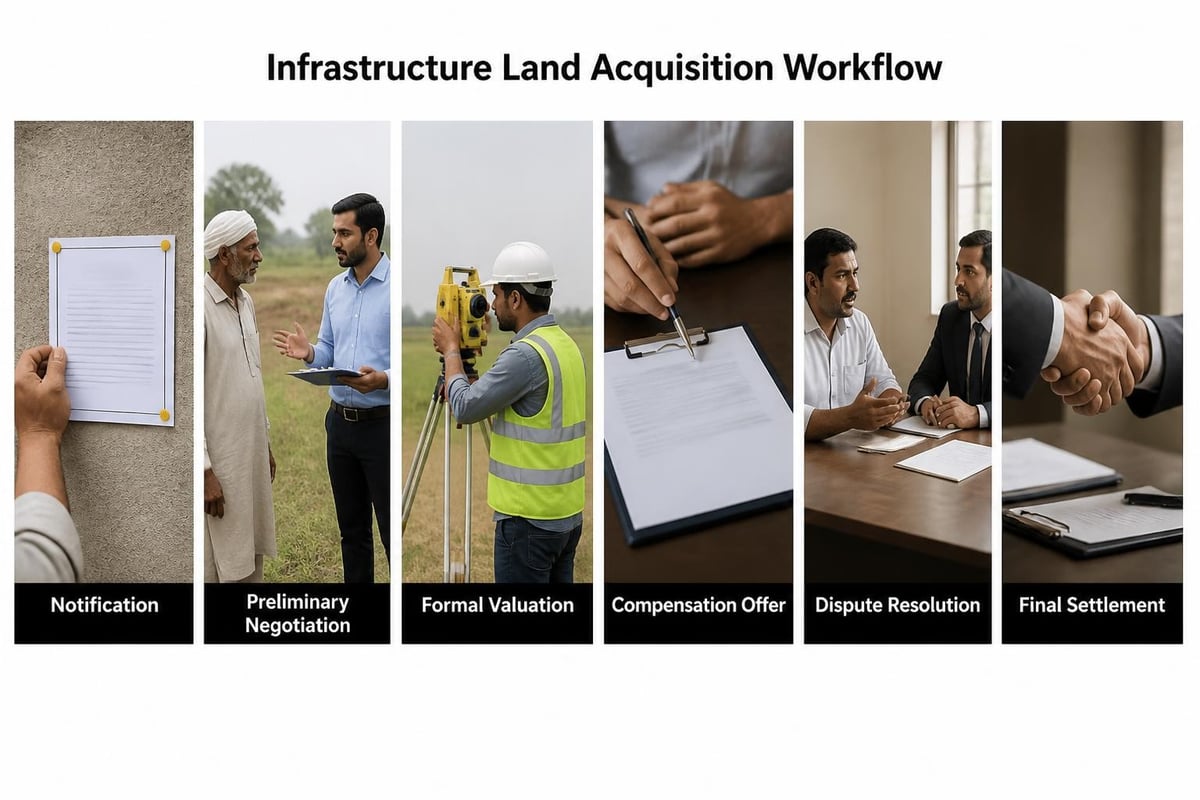
Navigating Compulsory Acquisition and Your Rights
Compulsory acquisition represents one of the most significant interactions property owners have with land agents. Understanding your rights and the process timeline empowers you to achieve fair outcomes.
The Notification Period
Acquiring authorities must provide formal notice of their intention to acquire your property. This notice period gives you time to engage professional representation, obtain independent valuations, and prepare your negotiating position. Never accept initial offers without professional advice, as these frequently undervalue your true entitlements.
Objection and Appeal Processes
Australian legislation provides property owners with specific rights to object to acquisitions and appeal compensation determinations:
- Formal objections can challenge whether the acquisition is necessary
- Alternative proposals may satisfy project needs without taking your land
- Compensation appeals go to independent tribunals or courts
- Cost recovery provisions often require authorities to pay your professional fees
Land agents familiar with these processes can identify grounds for objection and present compelling cases that either prevent acquisition or maximise compensation. The Hawai’i Department of Transportation Right-of-Way Manual provides detailed procedures that mirror processes used in Australian jurisdictions, demonstrating the structured approach government agencies follow.
Professional Qualifications and Industry Standards
The land agent profession maintains rigorous standards through professional bodies and continuing education requirements. When engaging a land agent, verify their qualifications and professional memberships to ensure competent representation.
Australian Property Institute (API) offers certification programs specifically for valuation and acquisition work. Certified Practising Valuers (CPV) with land acquisition specialisation possess the technical expertise needed for complex compensation negotiations.
International Standards and Best Practices
While Australian land agents operate under local legislation, international professional standards from organisations like RICS provide valuable frameworks for ethical practice and technical competence. The rural surveyor role described in UK practice shares many similarities with Australian land agent functions, particularly regarding rural property management and development coordination.
Professional land agents also stay current with evolving regulations, particularly around environmental compliance and federal funding requirements. For instance, EPA WIFIA federal requirements illustrate how infrastructure funding conditions affect land acquisition policies, a consideration for Australian agents working on projects with international standards or funding.
Strategic Considerations for Property Owners and Developers
Engaging a land agent strategically can prevent costly mistakes and unlock opportunities that might otherwise remain hidden. Both property owners facing acquisition and developers planning projects benefit from early land agent involvement.
Pre-Acquisition Planning
Developers benefit enormously from land agent expertise during project planning phases. Before committing to development plans, a land agent can:
- Identify all required land acquisitions and easements
- Assess likely acquisition costs and timelines
- Develop negotiation strategies for multiple landholders
- Coordinate with planning and environmental consultants
- Ensure compliance with Section 4(f) requirements when projects affect historic or recreational lands
This forward planning prevents project delays and budget overruns that often derail developments when land acquisition proves more complex than anticipated.
Protecting Long-Term Property Interests
For property owners not currently facing acquisition, understanding when land agent expertise might become relevant helps you protect long-term interests. Infrastructure planning often occurs years before formal acquisition notices, and savvy property owners monitor development plans affecting their areas.
If you're considering selling your residential property in suburbs like Revesby, Padstow, or Panania, understanding any planned infrastructure that might affect your property helps you make informed decisions. While working with an experienced real estate agent remains essential for residential sales, knowing whether planned roads, utilities, or public facilities might impact your property affects both timing and pricing strategies.
Coordination with Legal and Property Professionals
Successful land acquisition and compensation outcomes require coordination among multiple professionals. Land agents rarely work in isolation; they collaborate with solicitors, valuers, town planners, and in residential contexts, traditional real estate agents.
Legal Representation
Solicitors specialising in property and acquisition law provide essential support for land agent negotiations. They review contracts, advise on statutory rights, and represent clients in tribunal proceedings when compensation disputes cannot be resolved through negotiation.
Integration with Residential Property Services
When infrastructure projects affect residential properties, land agents and real estate agents may both serve the same client in different capacities. For example, if a road widening project requires part of your front garden, a land agent negotiates compensation for the land taken. If you subsequently decide to sell the remaining property, your real estate agent markets what remains to potential buyers.
This distinction matters particularly in growth areas where infrastructure development accompanies residential expansion. Property owners need clarity about which professional serves which function to avoid confusion and ensure comprehensive representation.

Contemporary Challenges in Land Acquisition Practice
The land agent profession faces evolving challenges as infrastructure needs, environmental concerns, and property rights intersect in increasingly complex ways. Understanding these contemporary issues helps property owners appreciate the value specialist land agents provide.
Environmental and Heritage Constraints
Modern land acquisition increasingly involves properties with environmental significance, heritage listings, or indigenous cultural importance. Land agents must coordinate with environmental consultants, heritage specialists, and indigenous land councils to navigate these sensitive matters while protecting their clients' interests.
Digital Infrastructure and Modern Easements
The rise of digital infrastructure creates new easement demands. Telecommunications providers, fibre optic networks, and renewable energy installations all require land access arrangements. These modern easements can have long-term implications for property use and value that weren't contemplated when traditional easement laws were written.
Professional land agents adapt traditional valuation and negotiation principles to these contemporary needs, ensuring property owners receive fair compensation for new forms of land use that might restrict future development or create ongoing access requirements.
Compensation Negotiation Tactics and Strategies
Effective negotiation separates exceptional land agents from merely competent ones. Understanding common negotiation tactics helps property owners appreciate the value skilled representation provides.
Information Asymmetry
Government authorities and large developers typically possess far more information about project requirements, alternative sites, and acquisition budgets than individual property owners. A skilled land agent levels this information imbalance through research, network connections, and strategic questioning.
Building Leverage Through Alternatives
Strong land agents identify and develop alternatives that create negotiating leverage. This might include demonstrating that project objectives could be achieved through different alignments, proving that your property has higher value than initially assessed, or showing that acquisition timing creates additional costs warranting higher compensation.
| Negotiation Element | Owner Without Agent | Owner With Professional Agent |
|---|---|---|
| Initial Offer Acceptance | 70-80% accept first offer | 15-25% accept first offer |
| Average Compensation Increase | Baseline | 25-45% above initial offer |
| Process Duration | Often rushed | Managed timeline |
| Legal Protection | Minimal documentation review | Comprehensive contract review |
| Appeal Success Rate | Low (lacking evidence) | High (documented case) |
These statistics demonstrate why engaging qualified representation typically produces substantially better outcomes despite professional fees.
Regional Variations and Local Expertise
Land acquisition law and practice vary significantly across Australian states and territories. What applies in New South Wales might differ from Queensland or Victoria processes. Local expertise matters enormously when navigating these jurisdictional differences.
State-Specific Legislation
Each Australian jurisdiction maintains its own legislation governing compulsory acquisition, compensation principles, and appeal processes. Professional land agents maintain current knowledge of relevant legislation in their practice regions and understand how local precedents affect compensation negotiations.
Local Market Knowledge
Just as local market knowledge benefits residential property transactions, it proves equally valuable in land acquisition contexts. A land agent familiar with recent acquisitions in your area knows what compensation rates were achieved, understands local authority negotiating patterns, and can benchmark offers against comparable outcomes.
This local expertise becomes particularly valuable in growth suburbs where infrastructure development accompanies residential expansion, creating multiple acquisition projects that establish local compensation precedents.
Future Directions for Land Agent Practice
The land agent profession continues evolving as infrastructure needs, environmental priorities, and property rights intersect in new ways. Several trends are shaping how land agents will practice in coming years.
Renewable Energy and Climate Adaptation
Australia's transition to renewable energy creates enormous demand for land access. Solar farms, wind installations, transmission lines, and battery storage facilities all require land acquisition or long-term easements. Land agents specialising in renewable energy projects help landowners understand and negotiate these new opportunities.
Climate adaptation infrastructure, including flood mitigation, coastal protection, and water security projects, also creates land acquisition requirements. These projects often involve sensitive environmental areas where compensation must account for ecological values alongside traditional property considerations.
Technology and Data Analytics
Modern land agents increasingly employ sophisticated data analytics, geographic information systems, and property technology tools. These technologies enhance valuation accuracy, identify comparable transactions, and strengthen negotiating positions through detailed market analysis.
Digital documentation systems also streamline the acquisition process, reducing delays and ensuring transparent record-keeping that protects all parties' interests throughout complex transactions.
Distinguishing Professional Services in Property Transactions
Understanding when you need a land agent versus other property professionals ensures you engage appropriate expertise for your specific circumstances. This clarity prevents costly misunderstandings and ensures comprehensive protection of your interests.
For standard residential property sales in suburbs like Revesby, Padstow, or Panania, experienced real estate agents provide the marketing expertise, negotiation skills, and market knowledge needed to achieve premium results. These professionals understand buyer psychology, create competitive tension through strategic marketing, and manage the sales process from listing through settlement.
Land agents serve different needs entirely. They become essential when government authorities, utility companies, or major developers require access to or acquisition of your property for purposes beyond standard residential sales. Their specialised knowledge of compensation law, valuation for non-market transactions, and negotiation with statutory bodies complements rather than replaces traditional real estate services.
Making Informed Decisions
Property owners benefit from understanding these distinctions when planning their property futures. If you're considering selling your home through normal market channels, connecting with experienced local agents ensures strong marketing and skilled negotiation. If infrastructure projects might affect your property, early consultation with a qualified land agent protects your compensation rights and ensures fair treatment.
Both professions serve essential but distinct roles within Australia's property industry, and knowing which expertise your circumstances require helps you achieve the best possible outcomes for your property goals.
Understanding land agent roles and how they differ from residential property services helps Australian property owners navigate complex acquisition scenarios while ensuring appropriate representation for their specific needs. Whether you're facing infrastructure projects that affect your property or planning your next residential move, professional guidance tailored to your circumstances delivers the results and peace of mind you deserve. Real estate sales agent Steven Cirillo specialises in residential property transactions across Revesby, Padstow, and Panania, providing expert guidance for buyers and sellers seeking exceptional results through strategic marketing, skilled negotiation, and detailed market knowledge. His straightforward communication and client-focused approach ensure you're well-informed and confident throughout your property journey.