
Understanding the complexities of property ownership extends beyond simple buy-and-sell transactions. Life real estate arrangements represent a specialised form of property interest that allows individuals to maintain residential rights whilst planning for future property distribution. These legal structures have become increasingly relevant in estate planning conversations, offering families strategic options for managing generational wealth transfer whilst addressing practical concerns around housing security, taxation, and aged care considerations. For property owners contemplating long-term planning strategies, grasping the fundamentals of life estates provides valuable insight into an often-overlooked aspect of real estate ownership.
What is Life Real Estate
Life real estate, commonly known as a life estate, represents a unique ownership structure where property rights are divided between two parties. The life tenant holds the right to occupy and use the property throughout their lifetime, whilst the remainderman receives full ownership only after the life tenant's passing. This arrangement creates a present interest for the life tenant and a future interest for the remainderman, establishing a legally binding framework that governs property use, responsibilities, and transfer.
The concept of life estates has evolved considerably within common law systems, providing property owners with alternatives to traditional ownership structures. Unlike standard freehold ownership where a single party holds complete control, life real estate divides ownership interests across time. This temporal division allows families to address multiple objectives simultaneously, balancing immediate housing needs with long-term estate planning goals.
Understanding what constitutes a life estate requires recognising its fundamental characteristics. The life tenant possesses the right to reside in the property, collect rental income if leased, and make reasonable modifications. However, these rights come with corresponding obligations, including property maintenance, rates payments, and insurance responsibilities. The life tenant cannot sell the property without the remainderman's consent, nor can they allow the property to deteriorate beyond normal wear and tear.
Legal Framework and Documentation
Establishing a life estate requires precise legal documentation that clearly defines each party's rights and responsibilities. Property documents bearing the designation "LE" indicate a life estate arrangement, signalling to conveyancers, lenders, and government authorities that ownership interests are divided. Understanding what LE means on property documents proves essential when reviewing titles and conducting property transactions.
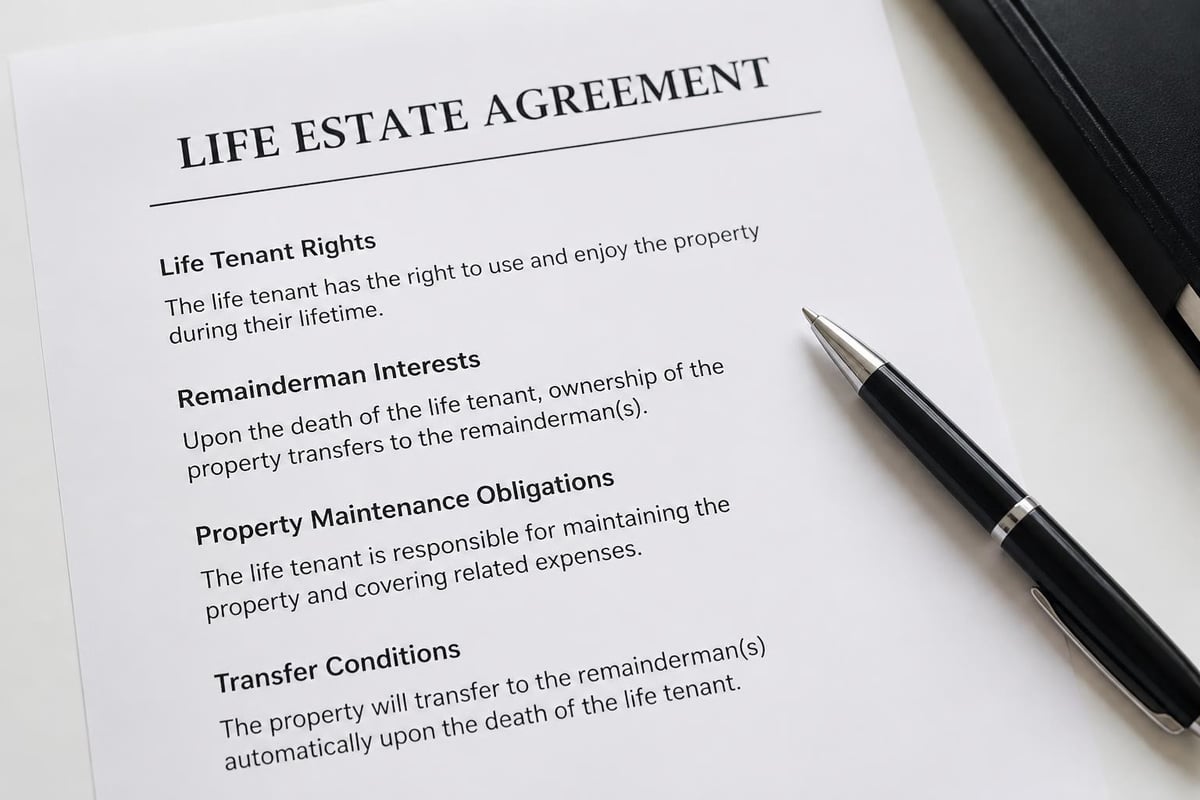
The creation of life real estate typically occurs through:
- Deed execution where property is transferred with explicit life estate terms
- Will provisions establishing life estates as part of testamentary dispositions
- Trust arrangements incorporating life estate structures within broader estate plans
- Property transfers between family members with retained life interests
Each method carries distinct legal implications, taxation consequences, and procedural requirements. Professional legal guidance ensures documentation meets statutory requirements whilst accurately reflecting the parties' intentions.
Types of Life Estate Arrangements
Different types of legal life estates serve varying purposes within property and estate planning contexts. Conventional life estates represent the most common structure, where a property owner transfers title whilst retaining lifetime occupancy rights. This arrangement allows elderly property owners to transfer assets whilst maintaining housing security.
Pur autre vie life estates create interests measured by another person's lifetime rather than the life tenant's. These arrangements might arise when property is granted to one party for the duration of a third party's life, addressing specific family or care-giving situations where occupancy rights relate to someone else's circumstances.
| Life Estate Type | Duration Measurement | Common Applications |
|---|---|---|
| Conventional | Life tenant's lifetime | Elderly parent retaining residence |
| Pur Autre Vie | Third party's lifetime | Care-giver arrangements |
| Enhanced | Modified terms and conditions | Complex family situations |
| Statutory | Created by law | Spousal rights in certain jurisdictions |
Life estates may also be subject to conditions or limitations that modify standard rights and obligations. Enhanced life estates, sometimes called "Lady Bird deeds" in certain jurisdictions, grant life tenants broader powers, including the ability to sell or mortgage property without remainderman consent. These variations provide flexibility for addressing diverse family circumstances and planning objectives.
Benefits of Life Real Estate Structures
Life real estate arrangements deliver multiple advantages for families managing intergenerational wealth transfer. Probate avoidance represents a significant benefit, as property passes directly to remaindermen upon the life tenant's death without court involvement. This streamlined transfer reduces legal costs, minimises delays, and maintains privacy around estate matters.
Key advantages include:
- Estate planning efficiency through automatic property transfer
- Asset protection from certain creditors and legal claims
- Aged care planning considerations in means-tested benefit assessments
- Family security ensuring housing stability for elderly relatives
- Tax planning opportunities depending on jurisdiction and circumstances
For families supporting elderly parents whilst planning for inheritance, life estates provide structured solutions. Parents maintain independence and housing security whilst children gain certainty around future property ownership. This arrangement often proves preferable to informal agreements that lack legal enforceability and create potential disputes.
The structure also addresses practical concerns around property management as life tenants age. Remaindermen typically hold vested interests in maintaining property values, creating natural incentives for collaborative decision-making around repairs, improvements, and long-term property care. Working with experienced real estate professionals helps families understand how these arrangements intersect with property transactions and market considerations.
Financial and Taxation Considerations
Life real estate arrangements carry significant financial implications requiring careful analysis. Property valuations must account for divided interests, with actuarial calculations determining the present value of life tenant rights versus remainderman interests. These calculations consider the life tenant's age, health, and life expectancy, producing values that shift over time.
Taxation treatment varies depending on jurisdiction and specific circumstances. Capital gains tax, land tax, and stamp duty obligations may be triggered at different points throughout the life estate's duration. Life tenants typically bear responsibility for ongoing property costs including council rates, insurance, and maintenance expenses. Remaindermen may face tax implications when ultimately assuming full ownership.

Understanding these financial dynamics proves essential before establishing life real estate arrangements. Professional advice from accountants, financial planners, and solicitors helps families navigate complex taxation rules whilst structuring arrangements that align with broader financial objectives.
Establishing a Life Estate Agreement
Creating a life estate agreement requires thorough planning and professional guidance. The process begins with clear communication among family members about objectives, expectations, and potential concerns. Misunderstandings around life estate rights and responsibilities frequently create family conflicts, making upfront clarity essential.
Documentation must address several critical elements:
- Property identification with precise legal descriptions
- Life tenant rights including occupancy, use, and modification parameters
- Remainderman interests specifying parties and their respective shares
- Maintenance obligations defining responsibility for repairs and improvements
- Dispute resolution mechanisms for addressing disagreements
- Termination provisions outlining circumstances for early conclusion
Professional conveyancers ensure documentation complies with land title registration requirements whilst protecting all parties' interests. These specialists navigate jurisdictional variations in life estate law, ensuring arrangements achieve intended outcomes without unintended consequences.
For families in Revesby, Padstow, and Panania considering life estate structures, understanding local property market dynamics adds important context. Property values, development trends, and demographic shifts all influence whether life estates represent optimal solutions for particular situations. Local real estate expertise provides valuable insights into how these arrangements interact with regional market conditions.
Life Estates and Property Transactions
Life real estate significantly impacts property transactions, creating complexities that require careful navigation. Selling property subject to a life estate requires both life tenant and remainderman consent, as each holds legally protected interests. Potential purchasers typically seek to acquire unencumbered title, necessitating cooperation between all parties.
Market dynamics present unique challenges. Buyers often discount properties subject to life estates, reflecting uncertainty around when full possession becomes available. Properties with elderly life tenants approaching end-of-life stages may attract investor interest, though such situations raise ethical considerations requiring sensitivity and respect.
| Transaction Scenario | Requirements | Typical Challenges |
|---|---|---|
| Life tenant sale | Both parties consent | Coordination and agreement |
| Remainderman sale of interest | Life tenant awareness | Valuation complexity |
| Mortgage application | All parties' involvement | Lender restrictions |
| Rental arrangement | Life tenant authority | Remainderman concerns |
When life estates terminate through the life tenant's death, property transfer occurs automatically subject to registration requirements. Remaindermen must complete administrative processes to update land titles, though ownership vests immediately upon death. This mechanism provides certainty whilst minimising transfer complications.
Working with trusted local agents familiar with life estate transactions ensures proper handling of these specialised situations. Experienced professionals understand documentation requirements, coordinate between parties, and navigate valuation complexities inherent in divided ownership structures.
Potential Drawbacks and Considerations
Despite their advantages, life real estate arrangements present potential challenges requiring careful consideration. Inflexibility represents a primary concern, as life estates prove difficult to modify once established. Changing family circumstances, relationship breakdowns, or evolving financial needs may render original arrangements unsuitable, yet legal barriers complicate adjustments.
Common challenges include:
- Limited life tenant control over property sale and major decisions
- Remainderman conflicts when interests diverge from life tenant needs
- Financing restrictions as lenders often refuse mortgages on life estate properties
- Maintenance disputes around responsibility for repairs and improvements
- Market value reduction due to ownership complexity and uncertainty
Family dynamics represent another significant consideration. Life estates function optimally when relationships remain harmonious and parties share common objectives. Disputes between life tenants and remaindermen can create expensive legal battles, property deterioration, and lasting family rifts. Clear communication and well-drafted agreements help mitigate these risks but cannot eliminate them entirely.

Alternative estate planning strategies may better serve certain situations. Testamentary trusts, family trusts, or simple property transfers with informal occupancy arrangements provide different balances of control, flexibility, and legal protection. Comparing options against specific family circumstances and objectives ensures appropriate structure selection.
Life Estates in Modern Property Planning
Contemporary property planning increasingly recognises life real estate as one tool among many available options. Modern families face complex challenges balancing aged care considerations, asset protection objectives, taxation efficiency, and family harmony. Life estates address some concerns whilst creating others, requiring nuanced analysis of individual situations.
Demographic trends influence life estate relevance. Australia's ageing population creates growing demand for estate planning solutions that preserve housing security whilst facilitating wealth transfer. Life estates provide mechanisms for adult children supporting elderly parents without forcing premature property sales or compromising parental independence.
However, changing family structures and longer life expectancies introduce complications. Life estates established when life tenants are in their sixties may continue for decades, during which property markets, family circumstances, and legal frameworks evolve substantially. This extended duration magnifies both benefits and risks, requiring robust initial planning and ongoing flexibility where possible.
For property owners exploring these options, comprehensive property guidance from knowledgeable professionals helps evaluate whether life estates align with broader objectives. Understanding local market conditions, property values, and transaction processes provides essential context for informed decision-making.
Practical Applications and Case Studies
Real-world applications demonstrate how life real estate functions across diverse scenarios. A common situation involves elderly parents transferring their family home to adult children whilst retaining lifetime occupancy rights. This arrangement provides parents with housing security, removes the property from the estate for probate purposes, and gives children certainty around future inheritance.
Investment properties present different dynamics. A property owner might transfer an investment property to children through a life estate whilst retaining rights to rental income throughout their lifetime. This structure allows income continuation whilst facilitating gradual wealth transfer, though taxation implications require careful management.
Blended family situations often benefit from life estate structures. A second marriage might involve creating a life estate allowing a new spouse to occupy the family home during their lifetime, with the property ultimately passing to children from the first marriage. This arrangement balances competing interests whilst providing clear, legally enforceable terms.
Regional property markets influence life estate effectiveness. In established suburbs like Revesby, Padstow, and Panania where property values remain strong and families maintain multi-generational connections, life estates often align well with community values and family objectives. Understanding these local dynamics through expert property assessment helps determine optimal approaches.
Managing Life Estate Properties
Active property management proves essential for maintaining value and preventing disputes in life real estate arrangements. Life tenants bear primary responsibility for day-to-day maintenance, ensuring properties remain in good condition through regular upkeep, repairs, and preventive care. However, major improvements and structural repairs often require remainderman involvement, both financially and in decision-making.
Insurance represents a critical consideration. Life tenants must maintain adequate property insurance protecting both their interests and remaindermen's future ownership rights. Determining appropriate coverage levels and ensuring continuous protection requires coordination between parties and regular policy reviews.
Property improvements create complex scenarios in life estate contexts. Life tenants may desire renovations enhancing their enjoyment during occupancy, whilst remaindermen might question whether improvements justify costs given their future ownership perspective. Clear agreements addressing improvement protocols, cost sharing, and approval processes help navigate these situations constructively.
Rental situations add further complexity. Life tenants typically hold rights to lease properties and collect rental income, but must maintain properties appropriately and avoid actions that diminish remainderman interests. Tenant selection, lease terms, and property management decisions require consideration of both immediate income objectives and long-term property value preservation.
Life real estate arrangements offer powerful tools for families navigating property ownership, estate planning, and generational wealth transfer. Understanding the legal framework, financial implications, and practical considerations enables informed decisions aligned with family objectives and individual circumstances. Whether you're considering buying your first home, planning for future property transfers, or exploring estate planning options, Steven Cirillo provides expert guidance grounded in extensive local market knowledge and commitment to exceptional client service. With straightforward communication and detail-oriented support throughout Padstow, Revesby, and Panania, Steven helps clients navigate complex property decisions with confidence and clarity.