
The number of real estate agents operating within any given market provides valuable insights into competition levels, service availability, and the overall health of the property sector. Understanding these figures helps buyers and sellers make informed decisions about who to work with, what service standards to expect, and how market dynamics influence property transactions. As the Australian property landscape continues to evolve in 2026, examining agent numbers reveals important trends that affect everyone involved in residential real estate.
Understanding the Current Landscape
The number of real estate agents has grown substantially across Australia over the past decade, with licensing bodies reporting steady increases in both metropolitan and regional areas. This growth reflects the enduring appeal of property as an investment class and the ongoing demand for professional representation during complex transactions.
According to comprehensive 2026 industry data, the number of real estate agents continues to rise despite market fluctuations. This upward trajectory creates both opportunities and challenges for consumers navigating the property market.
Key factors driving agent numbers include:
- Strong property market fundamentals in major cities
- Low barriers to entry for new licensees
- Flexible working arrangements and commission-based earnings
- Growing population centres requiring more local expertise
- Diversification of services beyond traditional sales
National and State Distribution
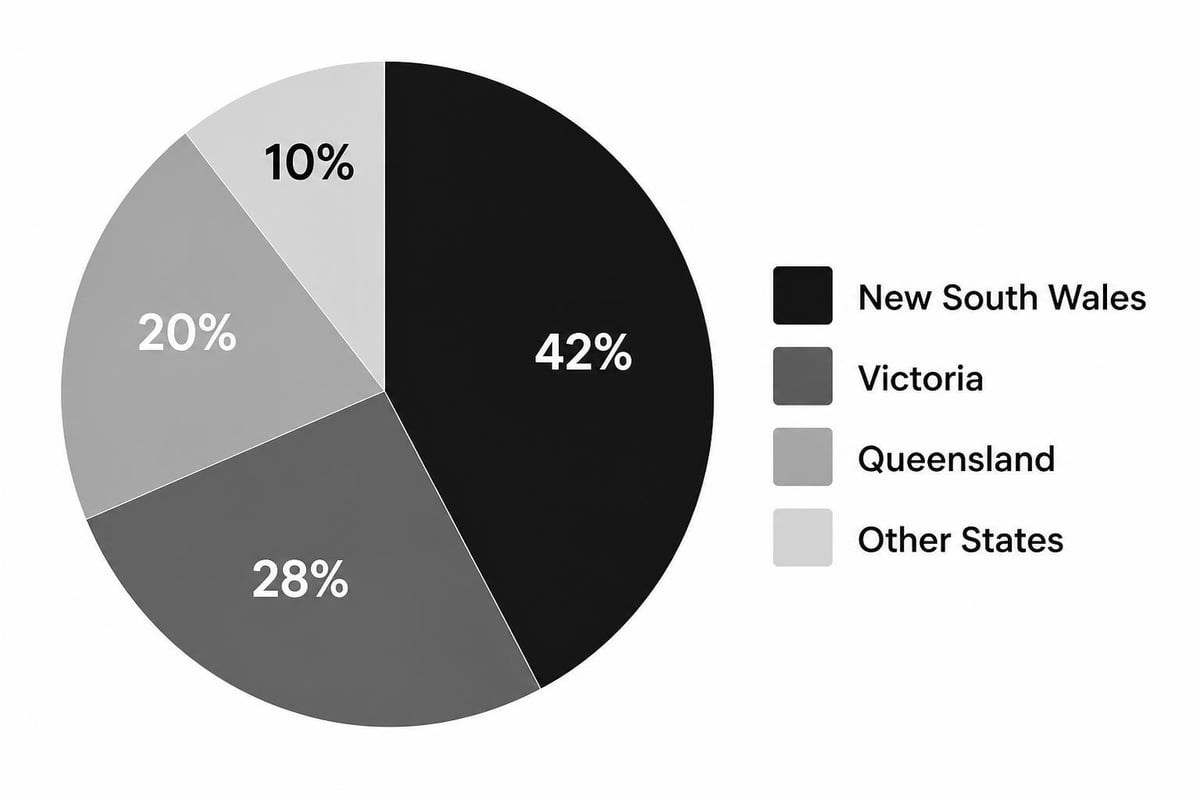
The distribution of agents varies significantly across Australian states and territories, with New South Wales and Victoria accounting for the largest concentrations. These states contain the nation's two largest property markets, Sydney and Melbourne, which naturally attract more practitioners seeking higher transaction volumes and values.
| State/Territory | Estimated Agent Numbers | Market Characteristics |
|---|---|---|
| New South Wales | 18,000+ | High competition, premium pricing |
| Victoria | 14,500+ | Strong auction culture, diverse suburbs |
| Queensland | 11,000+ | Growing regional centres, lifestyle markets |
| Western Australia | 6,500+ | Mining-influenced cycles, Perth focus |
| South Australia | 4,200+ | Stable markets, established suburbs |
Regional areas have experienced notable growth in the number of real estate agents as Australians increasingly seek lifestyle changes and more affordable housing options outside major capitals. This trend accelerated during the pandemic years and has maintained momentum into 2026.
Market Competition and Service Quality
A higher number of real estate agents in any area typically signals increased competition, which can benefit consumers through better service standards, more competitive commission structures, and greater choice. However, the relationship between agent numbers and service quality isn't always straightforward.
In areas like Padstow, Revesby, and Panania, local agents compete for listings whilst building long-term relationships within tight-knit communities. Real estate professionals who invest time understanding specific neighbourhoods often provide superior outcomes compared to those operating across broader territories.
What High Agent Numbers Mean for Sellers
When the number of real estate agents in your area is substantial, sellers gain several advantages:
- Access to diverse marketing approaches that reflect different agency philosophies
- Competitive appraisal processes where agents must justify their pricing strategies
- Specialised expertise in specific property types or price segments
- Flexible commission structures as agents compete for business
- Higher service standards driven by the need to differentiate
According to detailed real estate agent statistics, markets with healthy agent competition typically see better outcomes for vendors. Sellers should interview multiple agents, comparing not just commission rates but marketing strategies, local knowledge, and recent sales results.
Property appraisals and market assessments become particularly valuable in competitive agent markets. Understanding your property's true market value through data-driven analysis helps sellers identify which agents provide realistic expectations versus those inflating appraisals to win business. Accurate assessments backed by local market knowledge and comparable sales ensure sellers make informed decisions with confidence.
Impact on Buyers
The number of real estate agents also influences the buying experience. More agents means:
- Greater property selection across different agencies
- More open homes and inspection opportunities
- Varied negotiation styles and approaches
- Increased access to off-market opportunities through agent networks
- Different levels of buyer advocacy and support
First home buyers particularly benefit when working with experienced agents in markets where the number of real estate agents creates genuine choice. Buying homes becomes less intimidating when you can select representation that matches your communication preferences and needs.
Industry Challenges and Consolidation
Despite growing numbers, the real estate industry faces significant challenges that affect both new entrants and established practitioners. Research on key real estate agent statistics reveals that whilst licensing numbers increase, the number of consistently active agents who conduct regular transactions remains proportionally smaller.
Transaction Distribution
The distribution of transactions amongst agents follows a pronounced pattern where a minority of practitioners handle the majority of sales:
- Top 10% of agents complete approximately 50% of all transactions
- Top 25% of agents account for roughly 75% of sales volume
- Bottom 50% of licensees may complete fewer than 5 transactions annually
- Many licensed agents work part-time or as secondary income sources
This concentration means the effective number of real estate agents competing for your business may be smaller than raw licensing figures suggest. Sellers and buyers should focus on agents with proven track records rather than simply choosing from the largest possible pool.

Technology and Market Efficiency
Modern technology has transformed how the number of real estate agents translates into market coverage and efficiency. Digital platforms, CRM systems, and data analytics allow individual agents to service larger client bases than previously possible.
Technology impacts include:
- Virtual inspections expanding agent reach beyond local areas
- Digital marketing reducing geographical limitations
- Automated communication maintaining more client relationships
- Data analytics improving property valuations and market insights
- Online platforms connecting buyers directly with multiple agents
Research exploring machine learning and location data for real estate evaluation demonstrates how technology augments agent capabilities. Whilst the number of real estate agents grows, technology allows top performers to handle increased transaction volumes without proportional team expansion.
The Digital Advantage
Agents who leverage technology effectively compete successfully even in markets with high agent numbers. Digital tools create efficiencies in:
- Property marketing and exposure
- Buyer database management and matching
- Market analysis and reporting
- Transaction coordination and documentation
- Client communication and updates
Sellers should evaluate how prospective agents utilise technology alongside traditional relationship-building skills. The most effective practitioners combine digital efficiency with personal service that technology cannot replicate.
Regional Variations and Local Expertise
The number of real estate agents varies dramatically between metropolitan and regional markets, creating different competitive dynamics. Sydney's Eastern Suburbs might have dozens of agencies within a few kilometres, whilst regional towns may have only two or three practitioners serving entire districts.
| Market Type | Typical Agent Density | Key Characteristics |
|---|---|---|
| Premium Metro | 50+ agents per suburb | High specialisation, intense competition |
| Established Suburbs | 15-30 agents per area | Mix of boutique and network agencies |
| Regional Centres | 5-15 agents per town | Generalist approach, community focus |
| Rural/Remote | 1-5 agents per region | Broad territories, relationship-driven |
In suburbs like Revesby, Padstow, and Panania, the number of real estate agents creates meaningful competition whilst maintaining the community connections that drive successful transactions. Agents in these established areas build reputations over years, with local knowledge becoming a crucial differentiator.
Studies on social influence in the Australian real estate market highlight how local networks and community relationships affect property values and transaction success. In markets where the number of real estate agents is moderate rather than overwhelming, these relationship factors become particularly significant.
Economic Indicators and Market Cycles
The number of real estate agents functions as a lagging economic indicator, typically growing during property booms and contracting during extended downturns. However, licensing numbers rarely decline sharply even during market corrections, as many practitioners maintain licenses whilst pursuing reduced transaction volumes or alternative income sources.
Entry and Exit Patterns
Market cycles influence who enters and exits the profession:
- Growth periods attract new licensees seeking commission opportunities
- Stable markets see gradual consolidation as underperformers exit
- Downturns reduce transaction volumes but rarely force mass license surrenders
- Recovery phases demonstrate which agents maintained client relationships during slower periods
Understanding these patterns helps consumers identify agents with staying power who've navigated complete market cycles. Experience through various market conditions provides perspective that newer entrants cannot match.

Choosing the Right Agent
With substantial numbers of real estate agents available across most Australian markets, selecting the right representative requires systematic evaluation. The abundance of choice benefits consumers who invest time in proper due diligence.
Essential Selection Criteria
When evaluating agents, consider these factors beyond simple availability:
Experience and Track Record
- Years actively transacting in your specific area
- Recent sales results in similar property types
- Client testimonials and references
- Professional qualifications and ongoing education
Market Knowledge
- Demonstrable understanding of local price trends
- Awareness of upcoming developments affecting values
- Network within the local community
- Insight into buyer demographics and preferences
Marketing Capabilities
- Quality of current and past marketing campaigns
- Digital presence and online engagement
- Professional photography and presentation standards
- Database size and buyer reach
Communication Style
- Responsiveness to enquiries and updates
- Clarity in explaining processes and strategies
- Honesty about market conditions and realistic pricing
- Frequency and quality of progress reports
Research from verified databases of real estate agents shows that whilst the total number of real estate agents continues growing, the proportion demonstrating consistent excellence remains relatively stable. Focus your selection on proven performers rather than simply choosing from available options.
The Value of Local Specialists
As the number of real estate agents increases, specialisation becomes an important differentiator. Agents who focus on specific suburbs, property types, or price segments often outperform generalists working across broader territories.
Local specialists offer advantages that broad-coverage agents cannot match:
- Micro-market pricing expertise reflecting street-by-street variations
- Buyer networks specifically interested in targeted areas
- Development awareness regarding upcoming infrastructure and amenity changes
- Community relationships that generate off-market opportunities
- Historical knowledge of property-specific factors affecting value
In established suburbs where top realtors have built long-term practices, this local expertise translates directly into better outcomes. The number of real estate agents matters less than finding one with genuine specialisation in your specific market segment.
Future Trends Affecting Agent Numbers
Several trends will influence the number of real estate agents over coming years, with implications for both practitioners and consumers:
- Regulatory changes potentially raising entry standards or ongoing education requirements
- Technology disruption through AI-powered valuation tools and virtual transaction platforms
- Commission pressure from discount models and buyer's agent growth
- Consolidation as larger networks acquire independent agencies
- Specialisation demands requiring deeper expertise in niche markets
Research on housing market forecasting suggests that data-driven approaches will increasingly complement traditional agent expertise. The number of real estate agents may stabilise or even decline if technology reduces the need for intermediaries in straightforward transactions, whilst complex sales continue requiring human expertise.
Adapting to Change
Successful agents in 2026 and beyond demonstrate several characteristics:
- Technology adoption whilst maintaining personal service standards
- Continuous education in market analysis, negotiation, and client management
- Niche specialisation rather than attempting to serve all market segments
- Value demonstration through measurable results and exceptional service
- Ethical practice building long-term reputation over short-term gains
Consumers benefit from these trends as the number of real estate agents may grow but quality standards simultaneously rise through market pressures and professional development.
Making Informed Decisions
Understanding the number of real estate agents in your market provides context for making informed decisions about representation. Whether buying your first home, selling an investment property, or trading up to a luxury residence, the abundance of available agents creates both opportunity and complexity.
Focus on outcomes rather than simply selecting from available options. Interview multiple candidates, compare their approaches and results, and choose based on demonstrated capability rather than promises. Markets like Revesby, Padstow, and Panania benefit from healthy competition amongst local realtors who understand community nuances that broader-market agents might miss.
The relationship between agent numbers and service quality isn't linear. More choice enables finding better matches for your specific needs, but only if you invest time in proper evaluation. Request detailed marketing proposals, examine recent comparable sales, and verify claims through independent research before committing to representation.
As the property market continues evolving, the number of real estate agents will fluctuate based on economic conditions, regulatory changes, and technological advancement. Consumers who understand these dynamics whilst focusing on individual agent quality rather than simple availability position themselves for superior outcomes regardless of market conditions.
The number of real estate agents in any market reflects competition levels that can work to your advantage when you choose representation carefully. Whether you're selling a family home or purchasing your first property in Padstow, Revesby, or Panania, working with an experienced local specialist ensures you benefit from market knowledge, proven negotiation skills, and personalised service that delivers results. Steven Cirillo combines over 15 years of industry experience with honest communication and detail-oriented service to help clients achieve exceptional outcomes in today's competitive property market.