
Understanding property in real estate requires more than simply knowing what land and buildings are worth. It encompasses legal rights, physical assets, investment potential, and the complex regulatory framework that governs how properties can be bought, sold, developed, and used. Whether you're a first-time buyer exploring Revesby's established neighbourhoods, an investor considering Padstow's growth potential, or a homeowner in Panania preparing to sell, grasping the fundamentals of property classifications, ownership structures, and market dynamics will empower you to make informed decisions that align with your financial goals.
Understanding Property Classifications in Real Estate
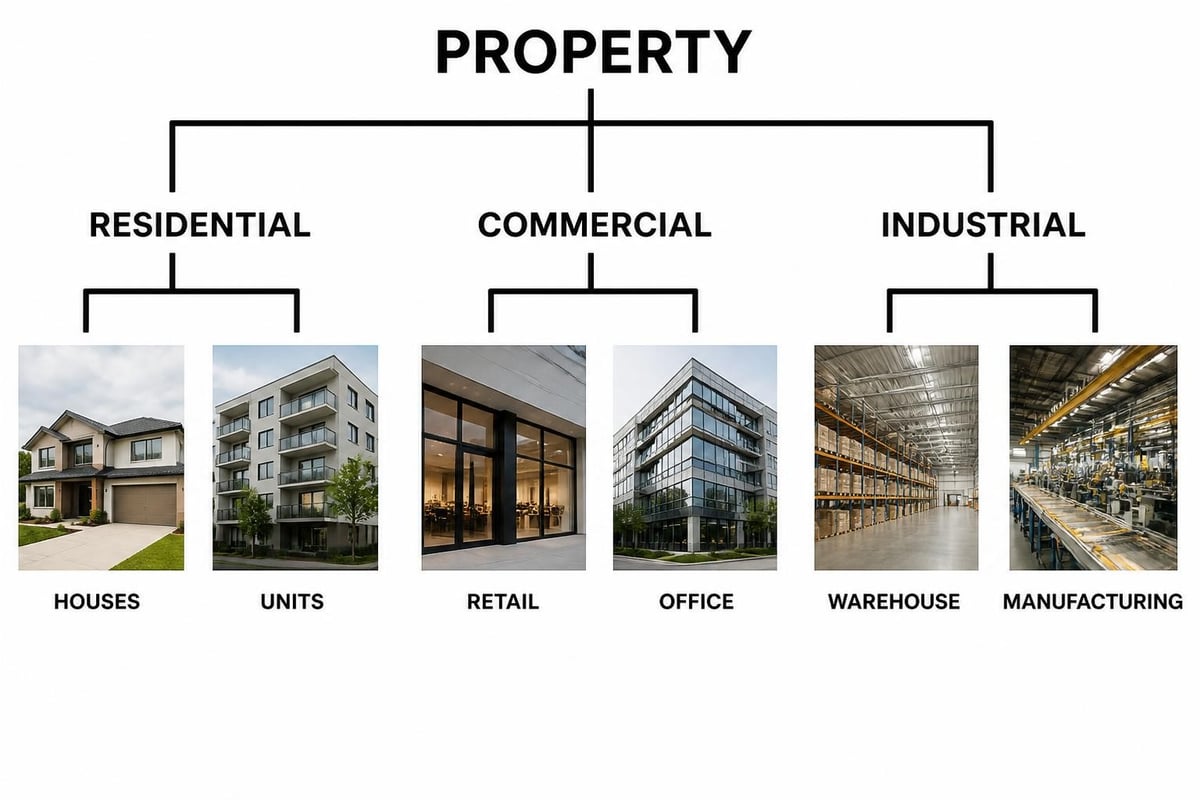
Property in real estate exists across multiple distinct categories, each serving different purposes and governed by unique regulatory requirements. The framework established by regulatory authorities classifies property based on usage, zoning designations, and legal characteristics that determine how land and improvements can be utilised.
Residential property represents the most familiar category for Australian households. This classification includes detached houses, townhouses, apartments, and dual occupancy dwellings designed primarily for living purposes. In suburbs like Revesby, Padstow, and Panania, residential properties form the backbone of community infrastructure, with established homes often featuring quarter-acre blocks that reflect the area's suburban character.
Commercial and Industrial Categories
Commercial property encompasses buildings and land used for business operations, generating income through lease arrangements or direct business activities. These properties include:
- Retail shopfronts and shopping centres
- Office buildings and business parks
- Hospitality venues like restaurants and hotels
- Medical and professional service facilities
Industrial property serves manufacturing, warehousing, and distribution functions. These assets typically require specific zoning approvals and infrastructure considerations that differ significantly from residential or commercial classifications.
Special purpose properties represent a fourth category, including schools, places of worship, government facilities, and recreational grounds. These properties often carry restrictions on usage and sale that require specialised knowledge to navigate.
| Property Type | Primary Use | Income Potential | Typical Investors |
|---|---|---|---|
| Residential | Living accommodation | Capital growth, rental | Individual buyers, families |
| Commercial | Business operations | Lease income | Investors, superannuation funds |
| Industrial | Manufacturing, storage | Long-term leases | Corporate investors, developers |
| Special Purpose | Community services | Limited/None | Government, institutions |
Ownership Rights and Legal Considerations
Property in real estate extends beyond physical structures to encompass a bundle of legal rights that define what owners can and cannot do with their assets. These rights form the foundation of property transactions and influence valuation, marketability, and development potential.
Freehold ownership provides the most comprehensive rights bundle, granting indefinite ownership of both land and improvements. This ownership structure dominates suburban markets throughout Sydney's south-west, where homeowners in areas like Padstow maintain full control over their properties subject only to planning regulations and easements.
Leasehold arrangements separate land ownership from improvement rights, creating contractual relationships that transfer usage rights for specified periods. While less common in residential contexts, leasehold structures appear frequently in commercial developments and retirement villages.
Strata Title and Community Schemes
Strata title enables individual ownership of units within multi-dwelling developments, with shared ownership of common property. This legal framework supports apartment buildings, townhouse complexes, and mixed-use developments throughout metropolitan areas.
Key ownership considerations include:
- Transfer of title processes and settlement requirements
- Encumbrances such as easements, covenants, and mortgages
- Zoning restrictions that limit property usage
- Heritage listings and development controls
Determining legal ownership requires accessing public records maintained by land registries, which document title holders, mortgages, and property boundaries. Understanding these records proves essential when conducting due diligence before purchasing property in real estate markets.
Valuation Methods and Market Assessment
Accurate property valuation forms the cornerstone of successful real estate transactions, whether selling an established home in Revesby or acquiring an investment property in Panania. Professional appraisers employ multiple methodologies to determine market value, each suited to different property types and market conditions.
The sales comparison approach analyses recent transactions of similar properties, adjusting for differences in location, size, condition, and features. This method dominates residential valuations, where comparable sales provide reliable benchmarks for establishing fair market value.
Income and Cost Approaches
Investment properties require income-based valuation that capitalises expected rental returns. This approach examines:
- Current and potential rental income streams
- Operating expenses and maintenance costs
- Vacancy rates and tenant quality
- Capitalisation rates reflecting market conditions
- Long-term appreciation potential
The cost approach calculates replacement value by estimating land worth separately from improvement costs, then deducting depreciation. This method suits unique properties lacking sufficient comparable sales data.
Modern valuation increasingly incorporates machine learning techniques that analyse vast datasets to identify pricing patterns and predict property values with greater accuracy. These technological advances complement traditional appraisal methods, providing additional insights for buyers and sellers navigating competitive markets.

Understanding your property's true market value requires expert analysis of local conditions, recent sales trends, and property-specific attributes. Professional property appraisals provide the foundation for pricing strategies that maximise returns whilst attracting qualified buyers in competitive timeframes.
Market Dynamics and Investment Considerations
Property in real estate functions as both shelter and investment vehicle, creating dual markets that respond to different economic drivers. Owner-occupiers prioritise lifestyle factors, school zones, and community amenities, whilst investors focus on rental yields, capital growth potential, and tax advantages.
Interest rates exert profound influence over property markets, affecting borrowing capacity and investment returns. The current rate environment in 2026 continues to shape buyer behaviour, with purchasers balancing affordability against property quality and location preferences.
Supply and demand dynamics vary significantly across property types and geographic locations. Established suburbs like Revesby, Padstow, and Panania demonstrate different market characteristics than emerging growth corridors or inner-city precincts.
Location and Infrastructure Impact
Property values reflect accessibility to employment centres, transport infrastructure, and essential services. Sydney's south-west benefits from established rail connections and developing road networks that enhance property appeal for commuters and families.
Investment criteria for evaluating property include:
- Rental yield percentages relative to purchase price
- Historical and projected capital growth rates
- Demographic trends influencing housing demand
- Infrastructure development plans
- Local employment and economic indicators
Comprehensive property data sources enable investors to conduct thorough market research, comparing performance across suburbs, property types, and investment timeframes. Access to accurate data supports decision-making that aligns with individual financial objectives and risk tolerance.
Property Marketing and Sales Strategies
Successfully selling property in real estate requires strategic marketing that showcases assets to qualified buyers whilst creating competitive tension that drives premium results. Professional presentation, targeted advertising, and expert negotiation combine to maximise sale outcomes.
High-quality photography and videography establish crucial first impressions, highlighting property features and lifestyle advantages. Virtual tours enable interstate and international buyers to inspect properties remotely, expanding the potential buyer pool beyond local markets.
Digital marketing channels dominate contemporary property promotion, including:
- Major property portals reaching millions of active buyers
- Social media advertising targeting specific demographics
- Email campaigns to qualified buyer databases
- Search engine marketing capturing active property seekers
Traditional marketing methods maintain relevance, particularly for established suburbs where local buyers value print advertising, signage, and community engagement. Auction campaigns generate urgency and competition, with strategic pricing and buyer management creating environments where multiple parties compete for desirable properties.

Tailored marketing approaches recognise that different properties attract distinct buyer profiles. Family homes appeal to parents prioritising school zones and backyards, whilst investment properties attract financially motivated buyers analysing rental returns and growth prospects.
Due Diligence and Transaction Processes
Purchasing property in real estate demands comprehensive investigation before exchange of contracts, protecting buyers from unforeseen issues that could affect value or usage. Thorough due diligence processes examine legal, physical, and financial aspects of properties under consideration.
Building and pest inspections reveal structural conditions, identifying defects, safety hazards, and maintenance requirements that inform negotiation strategies or withdrawal decisions. Professional inspectors provide detailed reports documenting property conditions at specific points in time.
Legal and Financial Verification
Contract reviews by qualified solicitors or conveyancers examine legal documents governing property transfers, identifying:
- Title particulars and ownership verification
- Zoning designations and planning restrictions
- Outstanding rates, taxes, and charges
- Special conditions affecting settlement
- Vendor disclosure obligations
Financial due diligence extends beyond property price to encompass ongoing costs including council rates, strata levies, insurance premiums, and utility expenses. Investment properties require analysis of existing tenancies, lease terms, and rental income verification.
| Due Diligence Element | Purpose | Professional Required |
|---|---|---|
| Building Inspection | Structural assessment | Licensed building inspector |
| Pest Inspection | Termite and pest detection | Qualified pest controller |
| Contract Review | Legal verification | Solicitor/conveyancer |
| Strata Report | Body corporate analysis | Strata manager |
| Title Search | Ownership confirmation | Conveyancer |
Pre-purchase enquiries with local councils reveal development applications, zoning proposals, and infrastructure plans that might affect property values or living conditions. This information proves particularly valuable in growth areas experiencing rapid development.
Property Data and Technology Integration
The real estate industry increasingly relies on sophisticated data platforms and standardised information systems that improve transaction efficiency and market transparency. Technology integration enhances how property information flows between agents, buyers, sellers, and service providers.
Multiple listing services aggregate property data from individual agents and agencies, creating comprehensive databases that buyers search when exploring available properties. These platforms standardise property descriptions, ensuring consistent information presentation across marketing channels.
Reliable property data sources support market analysis, competitive pricing strategies, and investment evaluation. Access to historical sales records, demographic information, and economic indicators enables data-driven decision-making that reduces transaction risk.
Blockchain technology emerges as a potential disruptor for property transactions, offering secure, transparent record-keeping that could streamline settlement processes and reduce fraud risks. Smart contracts may eventually automate aspects of property transfers, though regulatory frameworks continue evolving to accommodate these innovations.
Analytics and Predictive Modelling
Advanced analytics platforms process vast datasets to identify market trends, price movements, and investment opportunities. These tools assist both buyers and sellers in timing market entry, optimising pricing strategies, and forecasting returns.
Property technology applications enable remote inspections, digital document management, and electronic settlement processes that accelerate transactions whilst maintaining security. Mobile applications put property information directly into buyers' hands, facilitating immediate decision-making during inspections and auctions.
Artificial intelligence increasingly supports property valuations, buyer matching, and market forecasting, though human expertise remains essential for interpreting data within local contexts and individual circumstances.
Regulatory Framework and Compliance
Property in real estate operates within extensive regulatory frameworks governing transactions, property rights, and market conduct. Understanding these requirements protects participants from legal complications whilst ensuring fair, transparent market operations.
Consumer protection legislation establishes disclosure obligations for vendors, requiring truthful representation of property conditions, known defects, and material facts affecting value. Agents must provide accurate information whilst maintaining fiduciary duties to their clients.
Licensing requirements ensure real estate professionals meet minimum competency standards and maintain ongoing education in law, ethics, and industry practices. Professional conduct regulations establish behavioural standards that protect consumers from misconduct, misrepresentation, and negligent advice.
Key regulatory areas include:
- Contract formation and cooling-off period rights
- Trust account management for deposits and rental bonds
- Anti-money laundering compliance in property transactions
- Privacy protections for personal information
- Fair trading practices preventing misleading conduct
Planning and development regulations control how property can be used, modified, or subdivided. These frameworks balance individual property rights against community interests, environmental protection, and urban planning objectives.
First Home Buyers and Market Entry Strategies
Entering property markets as a first-time buyer presents unique challenges and opportunities, particularly in established suburbs offering diverse housing options at varying price points. Understanding available assistance programs, financing structures, and market timing helps first home buyers navigate complex purchasing processes.
Government incentives in 2026 continue supporting first home buyers through stamp duty concessions, grants, and deposit guarantee schemes that reduce upfront costs and borrowing requirements. These programs specifically target new and established property purchases within designated price ranges.
Financial Preparation and Borrowing Capacity
Mortgage pre-approval establishes realistic budgets before property searches commence, preventing disappointment from pursuing properties beyond financial reach. Lenders assess income, expenses, existing debts, and deposit savings when determining borrowing capacity.
Building substantial deposits reduces loan-to-value ratios, potentially eliminating lenders mortgage insurance requirements whilst demonstrating financial discipline to lenders. Savings patterns also reveal capacity to meet ongoing mortgage obligations throughout loan terms.
First home buyers benefit from professional guidance throughout purchasing journeys, helping navigate inspections, contract negotiations, and settlement processes. Local expertise across suburbs like Revesby, Padstow, and Panania provides valuable insights into neighbourhood characteristics, school zones, and community facilities that influence long-term satisfaction with property choices.
Understanding property in real estate empowers buyers, sellers, and investors to make informed decisions aligned with their financial goals and lifestyle priorities. From classification frameworks and valuation methodologies to market dynamics and regulatory compliance, comprehensive knowledge supports successful property transactions in competitive markets. Whether you're buying your first home, selling an established property, or building an investment portfolio, Steven Cirillo combines deep local market expertise across Padstow, Revesby, and Panania with proven strategies that deliver exceptional results and remarkable customer service throughout your property journey.