
Property ownership represents one of the most significant financial decisions Australians make, yet understanding real estate as a multifaceted asset class requires careful consideration of various frameworks and approaches. Whether you're purchasing your first home, building an investment portfolio, or preparing to sell a family property in Sydney's southwest suburbs, recognising how real estate as an asset functions within different contexts shapes better decision-making and stronger financial outcomes. The property market in 2026 continues evolving with changing interest rates, housing supply dynamics, and shifting buyer preferences, making it essential to understand the fundamental ways real estate operates within your wealth-building strategy.
Real Estate As an Investment Vehicle
Viewing real estate as an investment vehicle opens doors to wealth creation that few other asset classes can match. Australian property has consistently demonstrated its capacity to generate returns through both capital growth and rental income, providing investors with multiple revenue streams simultaneously.
Building Wealth Through Property Holdings
The foundation of property investment lies in understanding how real estate as a tangible asset appreciates over time. Unlike shares or managed funds, property provides physical security whilst building equity through mortgage repayment and market value increases.
Key investment advantages include:
- Leverage opportunities allowing you to control significant assets with relatively modest initial capital
- Tax benefits including negative gearing and depreciation deductions
- Inflation hedge properties that typically appreciate alongside or above inflation rates
- Forced appreciation through strategic renovations and improvements
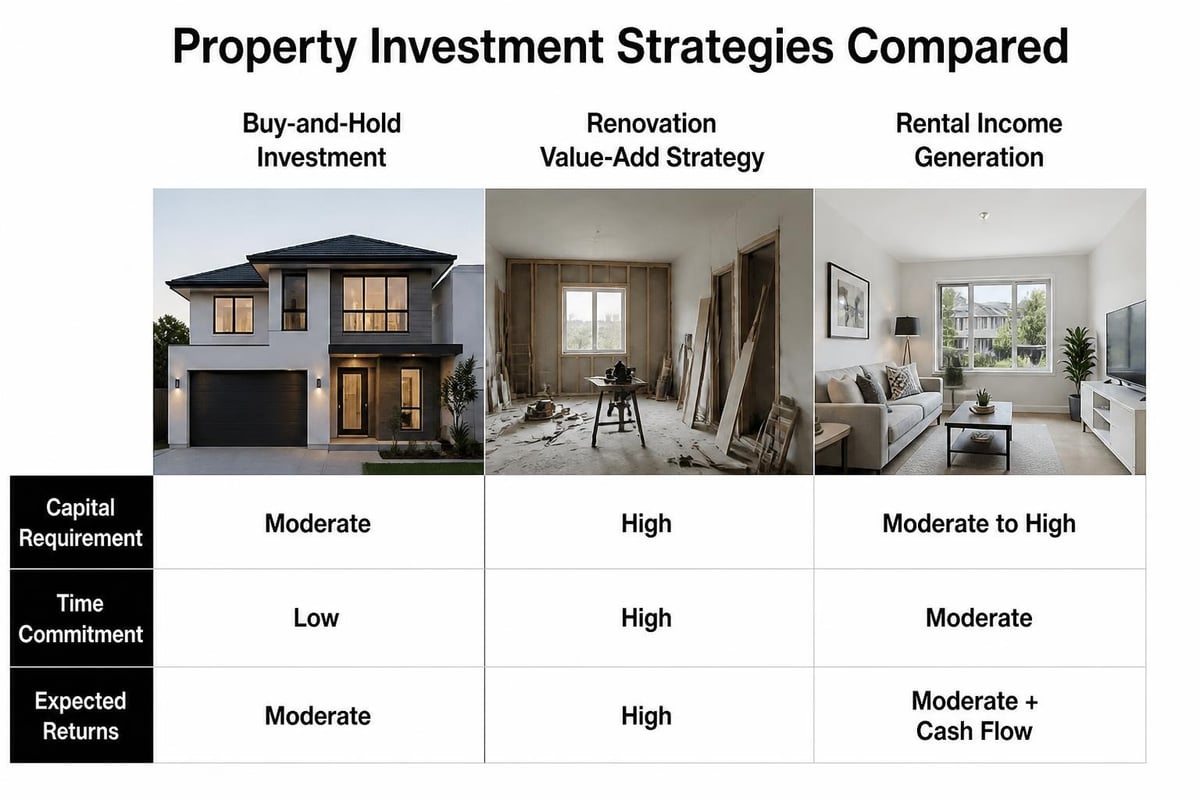
Proven real estate investment strategies demonstrate various approaches from buy-and-hold to value-add renovations, each suited to different investor profiles and risk tolerances. The key lies in matching your investment strategy to your financial circumstances, time horizon, and risk appetite.
Capital Growth Versus Rental Yield
Smart investors recognise real estate as a dual-benefit asset, offering both capital appreciation and income generation. Sydney's southwest corridor, including suburbs like Revesby, Padstow, and Panania, provides compelling examples of markets balancing these two return mechanisms.
| Strategy Focus | Best For | Risk Level | Time Horizon |
|---|---|---|---|
| Capital Growth | Long-term investors | Medium-High | 7-15 years |
| Rental Yield | Income seekers | Low-Medium | 3-10 years |
| Balanced Approach | Diversified portfolios | Medium | 5-12 years |
Areas experiencing infrastructure development, improved transport links, and demographic shifts often deliver superior capital growth, whilst established suburbs with strong rental demand provide reliable income streams. Understanding housing market trends helps investors identify which markets offer the best combination of growth and yield for their specific objectives.
Real Estate As a Wealth Preservation Tool
Beyond growth and income, Australians increasingly recognise real estate as a wealth preservation mechanism protecting purchasing power against inflation and currency fluctuations. Property's tangible nature provides security that paper assets cannot replicate.
Protecting Against Economic Volatility
The Australian property market has demonstrated remarkable resilience through economic cycles, with temporary downturns followed by sustained recovery periods. This characteristic makes real estate as a long-term holding particularly attractive for wealth preservation.
During periods of inflation, property values and rental income typically rise proportionally, maintaining the real value of your investment. This inflation-hedging quality proves especially valuable for retirees and those seeking to preserve wealth across generations.
Wealth preservation benefits:
- Tangible asset with intrinsic utility value
- Limited supply in desirable locations creating scarcity value
- Historical track record of long-term appreciation
- Protection against currency devaluation
- Ability to leverage equity for additional investments
When considering property in real estate markets, location selection becomes paramount for preservation strategies. Established suburbs with proven demand, strong infrastructure, and limited development potential typically offer superior preservation characteristics compared to fringe developments.
Real Estate As a Business Asset
Commercial property owners and business operators understand real estate as a productive business asset generating income whilst appreciating in value. This dual function creates powerful wealth-building opportunities for entrepreneurs and business owners.
Owner-Occupied Commercial Property
Purchasing the premises where you operate your business transforms rental expenses into equity building. Rather than paying rent to a landlord, mortgage repayments create ownership stakes whilst potentially reducing overall occupancy costs.
The tax treatment of owner-occupied commercial property differs significantly from residential holdings, with different depreciation schedules, GST implications, and capital gains considerations. Professional guidance ensures you maximise these benefits whilst maintaining compliance.
Development and Subdivision Opportunities
Sophisticated property owners recognise real estate as a development canvas where strategic improvements create substantial value. Sydney's southwest suburbs offer numerous opportunities for subdivision, dual occupancy, and renovation projects that unlock hidden equity.

Development activities require careful planning, council approval navigation, and market timing. Working with experienced real estate professionals who understand local regulations and market dynamics significantly improves project outcomes and reduces costly mistakes.
Real Estate As a Retirement Strategy
Forward-thinking Australians recognise real estate as a cornerstone of retirement planning, providing both income streams and capital reserves for their post-work years. The combination of rental income, equity access, and eventual downsizing creates multiple pathways to financial security.
Building a Property Portfolio for Retirement
Accumulating multiple properties during working years establishes passive income streams that supplement superannuation and Age Pension entitlements. This strategy requires careful timing, finance management, and property selection to ensure sustainable cash flow.
Portfolio building considerations:
- Diversification across different suburbs and property types
- Balance between capital growth and rental yield properties
- Debt reduction strategies approaching retirement age
- Tax implications of multiple property ownership
- Succession planning and estate considerations
The benefits of property investing extend beyond immediate returns, creating intergenerational wealth transfer opportunities and financial flexibility throughout retirement. Starting early maximises compound growth effects and provides time to weather market cycles.
Downsizing and Equity Release
Many retirees view real estate as a stored value reservoir, accessible through downsizing or equity release mechanisms. Selling a large family home and purchasing a smaller property releases capital for lifestyle expenses whilst maintaining home ownership.
| Strategy | Capital Released | Ongoing Costs | Flexibility |
|---|---|---|---|
| Full Downsizing | High | Lower | Maximum |
| Partial Downsizing | Medium | Medium | High |
| Equity Release Loan | Variable | Higher | Limited |
| Reverse Mortgage | Gradual | Compound Interest | Medium |
Recent changes to Age Pension asset test rules and downsizer superannuation contributions create additional incentives for strategic property transitions. Understanding these regulations ensures you maximise concessions whilst maintaining desired lifestyle standards.
Real Estate As a Tax Strategy
Australian taxation law provides numerous provisions making real estate as a tax-effective investment particularly attractive. Negative gearing, capital gains discounts, and depreciation deductions create opportunities to reduce overall tax burdens whilst building wealth.
Negative Gearing Benefits
When property expenses exceed rental income, investors can offset losses against other taxable income, reducing immediate tax obligations. This strategy proves especially valuable for high-income earners seeking to reduce marginal tax rates whilst building long-term wealth.
The tax implications of real estate investing require careful consideration of your individual circumstances, income sources, and investment timeline. What works brilliantly for one investor may prove unsuitable for another based on their tax position.
Tax-effective strategies include:
- Maximising depreciation claims through quantity surveyor reports
- Timing purchases and sales to optimise capital gains treatment
- Structuring ownership through trusts or companies where appropriate
- Claiming all legitimate deductions including travel, management fees, and maintenance
- Utilising the 50% CGT discount on properties held over 12 months
Capital Gains Tax Considerations
Understanding capital gains tax obligations shapes buying and selling decisions significantly. The main residence exemption provides complete CGT relief for owner-occupied homes, whilst investment properties receive 50% discounts when held beyond one year.
Strategic timing of property sales, particularly around retirement or lower-income years, can substantially reduce tax liabilities. Top agents familiar with these considerations provide valuable guidance on optimal selling timeframes that align with your broader financial planning.
Real Estate As a Legacy Asset
Families increasingly view real estate as an intergenerational wealth transfer vehicle, creating financial security for children and grandchildren. Property's enduring value and capacity for subdivision or development makes it ideal for legacy planning.
Structuring Property for Inheritance
Thoughtful estate planning ensures property assets transfer efficiently to intended beneficiaries whilst minimising tax obligations and family disputes. Testamentary trusts, joint tenancies, and strategic gifting each offer different benefits depending on family circumstances.
Professional legal and financial advice proves essential when structuring real estate as a legacy asset. The combination of property law, taxation rules, and family dynamics creates complexity requiring expert navigation.
Legacy planning considerations:
- Equal versus fair distribution among multiple beneficiaries
- Provision for property maintenance and rates during transition periods
- Potential need for property sales to equalise inheritances
- Capital gains tax implications for inherited properties
- Family business succession where property forms part of operations
Educational Opportunities Through Property
Some families utilise real estate as an educational tool, involving children in investment decisions, property management, and market analysis. This practical financial education builds knowledge and confidence for future independent property ownership.
Purchasing properties near universities for student accommodation creates both immediate utility and long-term investment returns. These strategies combine practical family needs with strategic wealth building, demonstrating real estate as a versatile asset across multiple objectives.

Real Estate As a Lifestyle Choice
Beyond financial returns, many Australians prioritise real estate as a lifestyle enabler, providing security, stability, and the freedom to create personalised living environments. The emotional and psychological benefits of home ownership often exceed purely economic considerations.
First Home Ownership Journey
Entering the property market represents a significant life milestone for many Australians. First home buyers in 2026 face unique challenges with current housing market prices influenced by interest rates, lending criteria, and affordability constraints.
Despite these challenges, government incentives including first home owner grants, stamp duty concessions, and first home super saver schemes improve accessibility. Understanding available support mechanisms and working with knowledgeable professionals dramatically improves first-time buyer success rates.
Steven Cirillo provides expert guidance for first home buyers navigating Sydney's southwest property markets, offering Property Appraisals & Market Assessments that help buyers understand realistic pricing and identify suitable opportunities within their budgets.
Customisation and Personal Expression
Owner-occupiers value real estate as a canvas for personal expression, undertaking renovations, landscaping, and modifications that reflect individual tastes and family needs. This creative freedom distinguishes ownership from renting, contributing to satisfaction beyond financial metrics.
The capacity to modify and improve properties creates both lifestyle enhancement and potential value addition. Strategic improvements that align with market preferences deliver dual benefits of improved living quality and stronger resale prospects.
Real Estate As a Market Indicator
Economists and policymakers closely monitor real estate as an economic indicator reflecting broader economic health, consumer confidence, and demographic trends. Property market movements often signal upcoming shifts in the wider economy.
Reading Market Signals
Understanding property market cycles helps buyers and sellers time decisions strategically. Housing market trends in 2026 demonstrate how inventory levels, days on market, and price movements indicate market conditions shifting between buyer and seller advantages.
Key market indicators include:
- Auction clearance rates showing demand strength
- Days on market revealing pricing accuracy
- Stock levels indicating supply-demand balance
- Price growth rates showing momentum direction
- Rental vacancy rates demonstrating investment demand
Local market expertise proves invaluable when interpreting these signals. Suburbs like Revesby, Padstow, and Panania experience micro-market variations that differ from broader Sydney trends, requiring detailed local knowledge for accurate assessment.
Demographic Shifts and Property Demand
Population movements, age distribution changes, and household formation patterns significantly influence property demand. Areas receiving infrastructure investment, improved transport links, or lifestyle amenities often experience accelerated demand growth.
Working with agents who understand local market dynamics ensures you position properties effectively or identify emerging opportunity areas before broader market recognition drives prices higher. This local intelligence creates competitive advantages for both buyers and sellers.
Real Estate As a Diversification Strategy
Investment advisers consistently recommend treating real estate as one component within diversified portfolios rather than concentrating all wealth in property. This balanced approach manages risk whilst capturing property's unique benefits.
Balancing Property With Other Investments
The 36 ways to invest in real estate demonstrate the variety available within property investing itself, from direct ownership to REITs, syndications, and crowdfunding platforms. This internal property diversification complements holdings in shares, bonds, and cash.
| Asset Class | Liquidity | Income | Growth | Risk Level |
|---|---|---|---|---|
| Residential Property | Low | Medium | Medium-High | Medium |
| Commercial Property | Very Low | High | Medium | Medium-High |
| REITs | High | Medium-High | Medium | Medium |
| Shares | High | Low-Medium | High | High |
| Bonds | Medium | Low-Medium | Low | Low |
Each asset class contributes different characteristics to overall portfolio performance. Property's low correlation with share market movements provides valuable diversification benefits, reducing overall portfolio volatility whilst maintaining growth potential.
Risk Management Through Property Selection
Even within property portfolios, diversification across locations, property types, and price points reduces concentration risk. Combining established suburbs with emerging areas, apartments with houses, and different tenant demographics creates resilience against localised market downturns.
This strategic approach to real estate as a portfolio component rather than singular investment improves long-term outcomes and reduces vulnerability to specific market segment underperformance. Professional guidance helps structure portfolios matching individual risk tolerance and return objectives.
Understanding real estate as a multifaceted asset class rather than simply somewhere to live unlocks powerful financial opportunities across investment, wealth preservation, retirement planning, and legacy creation. Whether you're considering buying homes in Sydney's southwest, building an investment portfolio, or preparing to sell a cherished family property, recognising these various frameworks helps align property decisions with broader life and financial goals. Real estate sales agent Steven Cirillo brings over 15 years of experience helping clients in Padstow, Revesby, and Panania navigate property transactions with honesty, expertise, and remarkable attention to detail that consistently delivers above-expectation results.