
Getting real estate sold successfully requires more than simply listing a property and hoping for the best. In 2026, the Australian property market demands strategic planning, precise pricing, compelling marketing, and expert negotiation to achieve optimal results. Whether you're selling your first home in Padstow, an investment property in Revesby, or a family residence in Panania, understanding the complete sales process empowers you to make informed decisions and maximise your return. This comprehensive guide explores every critical element that contributes to getting real estate sold efficiently and profitably.
Understanding the Real Estate Sold Process
The journey from listing to settlement involves multiple stages, each requiring careful attention and professional expertise. When real estate sold successfully, it's typically the result of methodical preparation and strategic execution rather than luck or market timing alone.
Initial Property Appraisal and Market Assessment
Before any property enters the market, accurate valuation forms the foundation of success. Professional appraisals consider recent comparable sales, current market conditions, property features, location advantages, and buyer demand patterns. In suburbs like Padstow, Revesby, and Panania, local market knowledge proves invaluable for determining realistic price expectations.
Key appraisal factors include:
- Recent sales of similar properties within 1-2 kilometres
- Current inventory levels and competition
- Unique property features that add value
- Seasonal market trends and buyer activity
- Economic indicators affecting buyer confidence
Understanding these elements helps sellers set achievable price targets and realistic timelines. Properties priced correctly from the outset consistently achieve better results than those requiring price reductions after extended market exposure.

Pre-Sale Preparation and Presentation
Properties that present well generate stronger buyer interest and achieve premium prices. The real estate transaction process emphasises the importance of first impressions throughout every stage.
Strategic preparation includes addressing maintenance issues, enhancing curb appeal, decluttering interiors, and highlighting property strengths. Investment in professional styling can deliver substantial returns, particularly in competitive markets where multiple properties compete for buyer attention.
| Preparation Task | Typical Cost | Potential Return |
|---|---|---|
| Professional cleaning | $300-$600 | High buyer appeal |
| Minor repairs | $500-$2,000 | Prevents price objections |
| Staging consultation | $400-$800 | 3-5% price premium |
| Garden maintenance | $200-$500 | Strong first impression |
| Fresh paint (key areas) | $1,000-$3,000 | Modernised appearance |
These investments typically deliver returns many times their cost when real estate sold at premium prices due to superior presentation.
Marketing Strategy for Real Estate Sold Successfully
Effective marketing distinguishes properties that sell quickly at strong prices from those that languish on the market. A comprehensive residential property sales approach combines traditional and digital channels to maximise exposure and generate qualified buyer interest.
Professional Photography and Visual Content
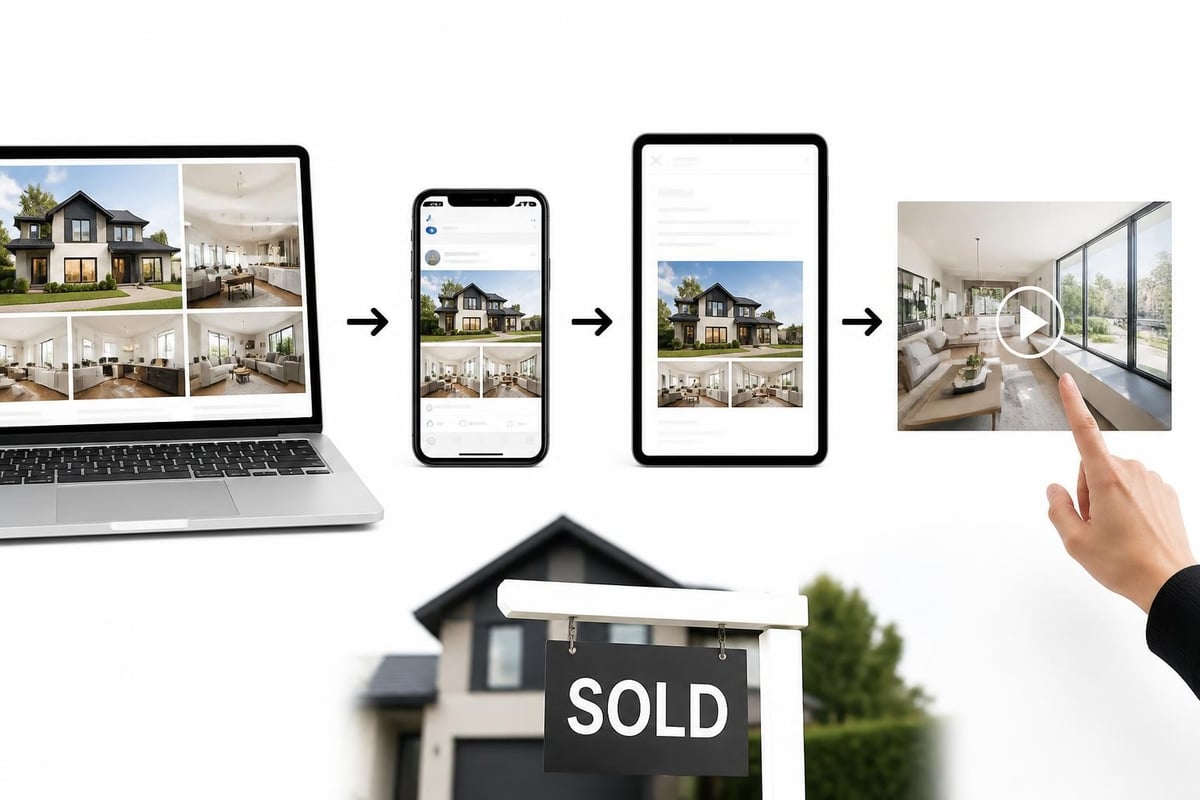
High-quality visual content forms the cornerstone of modern property marketing. Professional photography, videography, drone footage, and virtual tours showcase properties in their best light and capture buyer attention across digital platforms.
Properties with professional imagery receive significantly more online enquiries than those with amateur photographs. In 2026, buyers begin their property search online, making visual presentation critical for generating initial interest and securing inspections.
Digital Marketing and Online Presence
Digital advertising reaches targeted buyer segments through property portals, social media platforms, and search engine marketing. Strategic campaigns ensure properties appear before qualified buyers actively searching in specific locations and price ranges.
Effective digital marketing channels include:
- Premium placement on major property portals
- Targeted Facebook and Instagram advertising
- Google search campaigns for location-specific terms
- Email marketing to qualified buyer databases
- Virtual tours and video content on YouTube
Coordinated campaigns across multiple channels create market presence and urgency, essential elements for getting real estate sold at optimal prices.
Traditional Marketing Methods
While digital dominates, traditional marketing maintains relevance for reaching certain buyer demographics. Printed brochures, signboards, local newspaper advertising, and letterbox campaigns complement digital strategies and reinforce market presence.
Strategic use of traditional methods ensures comprehensive market coverage, particularly important in established suburbs where long-term residents may not engage primarily through digital channels.
Pricing Strategy and Market Positioning
Pricing directly influences how quickly and successfully real estate sold. Properties priced strategically generate competition among buyers, while overpriced listings struggle regardless of marketing quality.
Competitive Price Analysis
Thorough market analysis examines recent sales, current listings, and expired properties to identify optimal pricing positions. According to current market data, median home prices and days on market vary significantly across different suburbs and property types.
Successful pricing considers both market evidence and psychological factors. Buyers have access to comprehensive sales data through online portals, making unrealistic pricing immediately apparent and reducing enquiry levels.
Pricing Tactics for Different Sale Methods
Different sale methods require distinct pricing approaches. Private treaty sales typically advertise specific prices or price ranges, while auction campaigns build competition without fixed pricing.
- Price guide development based on comparable sales
- Strategic underquoting avoidance to maintain buyer trust
- Flexibility assessment for negotiation parameters
- Market feedback integration during campaign periods
- Adjustment readiness if initial positioning proves inaccurate
Properties achieving strong results typically feature pricing that attracts multiple interested buyers, creating competitive tension that drives final sale prices upward.
Buyer Engagement and Property Inspections
Converting interest into offers requires professional buyer engagement throughout the inspection and consideration phases. The way agents conduct property viewings significantly impacts buyer perception and willingness to make competitive offers.
Conducting Effective Inspections
Private inspections and open homes serve different purposes in buyer engagement strategies. Private viewings allow personalised property presentations and direct buyer communication, while open homes create visible competition and urgency.
Inspection best practices include:
- Preparation of comprehensive property information
- Prompt responses to buyer enquiries
- Professional presentation and property knowledge
- Creation of welcoming, neutral environments
- Follow-up communication after viewings
Buyers appreciate transparent communication and detailed property information. Sellers who understand how real estate agents sell houses recognise the value of professional inspection management in achieving premium outcomes.
Qualifying Buyers and Managing Enquiries
Not all enquiries represent serious buyers. Professional agents qualify prospects to focus effort on motivated, financially capable purchasers most likely to proceed with offers.
Qualification includes understanding buyer timelines, finance pre-approval status, property requirements, and decision-making processes. This information helps agents provide relevant property information and appropriate urgency messaging to serious prospects.
Negotiation and Offer Management
When real estate sold at premium prices, skilled negotiation typically plays a crucial role. Managing multiple offers, understanding buyer motivations, and negotiating favourable terms require experience and strategic thinking.
Evaluating Offers and Terms
Purchase offers involve more than price alone. Settlement terms, deposit amounts, subject clauses, and settlement dates all impact offer attractiveness and transaction certainty.
| Offer Element | Consideration Factors | Impact on Seller |
|---|---|---|
| Purchase price | Market value comparison | Direct financial outcome |
| Deposit amount | Buyer commitment level | Transaction security |
| Settlement period | Seller timeline needs | Flexibility and planning |
| Subject clauses | Finance, building, pest | Risk and certainty |
| Inclusions/exclusions | Fixtures, fittings | Final value adjustment |
Experienced agents evaluate offers holistically, considering both financial and practical elements to recommend the most advantageous outcome for sellers.
Counter-Offer Strategies
Initial offers rarely represent buyers' maximum positions. Strategic counter-offers test buyer commitment while maintaining negotiation momentum toward successful outcomes.
Effective counter-offers balance firmness on key terms with flexibility on secondary matters. Understanding buyer motivations allows agents to structure counter-offers that address concerns while protecting seller interests.
Legal and Financial Considerations
The administrative and legal aspects of getting real estate sold require careful attention to avoid delays, disputes, or financial complications. Understanding the costs to sell a house helps sellers budget appropriately and avoid surprises.
Contract Preparation and Review
Sale contracts must accurately reflect agreed terms and comply with state legislation. Professional legal review ensures contracts protect seller interests and minimise dispute risks.
Key contract elements include property description, sale price, deposit arrangements, settlement date, special conditions, and included fixtures. Errors or ambiguities in contracts can lead to costly disputes or transaction failures.
Settlement Process and Costs
Settlement involves property title transfer, mortgage discharge, final financial adjustments, and key handover. Sellers should understand settlement costs including agent commissions, legal fees, marketing expenses, and potential capital gains tax implications.
Typical selling costs include:
- Agent commission (typically 1.5-3% of sale price)
- Marketing expenses ($2,000-$8,000 depending on campaign)
- Legal fees ($800-$2,000)
- Mortgage discharge fees (if applicable)
- Certificate and report costs
Understanding these costs from the outset allows accurate calculation of net proceeds and realistic financial planning.

Sale Methods and Campaign Strategies
Different sale methods suit different properties, market conditions, and seller circumstances. Choosing the optimal approach significantly impacts outcomes and timelines.
Auction Campaigns
Auctions create competitive environments where buyers bid publicly, potentially driving prices above initial expectations. Auction campaigns typically run for three to four weeks, building buyer interest through scheduled inspections and marketing intensity.
Successful auctions require strong buyer registration, competitive bidding, and reserve prices set at realistic market levels. Properties that suit auction methods include those with broad appeal, strong market demand, or unique features that generate emotional buyer responses.
Private Treaty Sales
Private treaty involves negotiating directly with interested buyers, typically after advertising an asking price or price range. This method offers flexibility in negotiation and timing while maintaining transaction privacy.
Private treaty suits properties in slower markets, those requiring longer selling periods, or situations where sellers prefer discrete negotiations. The real estate sales process provides additional insights into private treaty effectiveness.
Expression of Interest and Tender
Alternative methods like expressions of interest or tender suit unique properties or complex sale situations. These approaches invite written offers by specified dates, allowing sellers to evaluate all proposals before selecting the most favourable.
Market Conditions and Timing Considerations
External market factors significantly influence how quickly and successfully real estate sold. Understanding current conditions helps set realistic expectations and optimal timing strategies.
Seasonal Market Variations
Australian property markets typically show seasonal patterns, with spring and autumn generating higher buyer activity than winter and late summer. However, local market dynamics can vary from national trends.
Padstow, Revesby, and Panania markets each demonstrate unique characteristics influenced by local demographics, infrastructure projects, and economic factors. Understanding these local variations helps sellers time their campaigns for maximum impact.
Economic Indicators and Market Sentiment
Interest rates, employment levels, consumer confidence, and economic growth all influence property market activity. In 2026, increasing investor activity continues to shape market dynamics across many Australian suburbs.
Sellers monitoring economic indicators can anticipate market shifts and adjust strategies accordingly. However, personal circumstances often override perfect timing considerations, making property preparation and professional representation more controllable success factors.
Post-Sale Responsibilities and Transition
After contracts exchange, sellers must fulfil various obligations to ensure smooth settlement and legal compliance. Understanding post-sale responsibilities prevents complications and ensures transaction completion.
Property Maintenance Until Settlement
Sellers must maintain properties in the condition reflected at contract exchange. Significant changes or damage may allow buyers to withdraw or demand compensation, potentially jeopardising transactions.
Properties should remain insured until settlement completes. Sellers should also ensure utilities remain connected and properties remain accessible for pre-settlement inspections if specified in contracts.
Documentation and Final Preparations
Settlement requires various documents including title deeds, rates clearances, and statutory declarations. Organising these materials promptly prevents settlement delays and associated costs.
Final property preparation includes removing all possessions unless specifically included in sale terms, cleaning properties to reasonable standards, and ensuring all included fixtures and fittings remain in working order.
Professional Representation Benefits
While some sellers consider private sales to save commission costs, professional representation typically delivers superior outcomes that far exceed agency fees. Experienced agents provide market knowledge, negotiation expertise, marketing resources, and transaction management that significantly impact final results.
Professional agents understand local market nuances, maintain extensive buyer networks, implement comprehensive marketing campaigns, and negotiate from positions of expertise. These advantages consistently deliver higher sale prices and smoother transactions.
For sellers in Padstow, Revesby, and Panania, working with specialists who understand local market conditions, buyer preferences, and pricing dynamics proves particularly valuable. Local expertise combined with broader market knowledge creates optimal selling outcomes.
Common Mistakes That Prevent Real Estate Sold Successfully
Even well-intentioned sellers make mistakes that compromise results. Understanding common pitfalls helps avoid expensive errors and achieve better outcomes.
Overpricing and Market Resistance
The most common mistake involves overpricing based on emotional attachment rather than market evidence. Overpriced properties generate minimal buyer interest, extended market time, and eventual price reductions that stigmatise listings and reduce final sale prices.
Overpricing consequences include:
- Reduced buyer enquiry levels
- Longer time on market
- Stale listing perception
- Need for subsequent price reductions
- Lower final sale prices than correct initial pricing would achieve
Properties priced correctly from the outset consistently outperform those requiring price adjustments, even when final prices end up similar.
Inadequate Property Presentation
Poor presentation leaves money on the table regardless of other factors. Buyers struggle to see past clutter, maintenance issues, or outdated décor, reducing perceived value and offer prices.
Investment in professional styling, repairs, and cleaning typically delivers returns many times the expenditure when real estate sold at premium prices due to superior presentation. Viewing properties through buyer eyes rather than owner perspectives proves essential for maximising appeal.
Inflexible Negotiation Approaches
Rigid negotiation positions can cost sellers significant amounts or prevent sales entirely. While protecting key interests remains important, inflexibility on secondary matters often derails otherwise successful transactions.
Understanding which terms matter most and where flexibility exists allows agents to structure agreements that satisfy all parties. Properties that don't sell often involve sellers who prioritised minor terms over successful completion.
Technology and Innovation in Property Sales
Technology continues transforming how real estate sold, creating new opportunities for enhanced marketing, buyer engagement, and transaction efficiency. Embracing these innovations helps properties stand out in competitive markets.
Virtual Tours and 3D Technology
Immersive property visualisation through 3D virtual tours and augmented reality applications allows buyers to explore properties remotely, increasing qualified enquiry levels and reducing time-wasters.
Virtual technology proves particularly valuable for attracting interstate or international buyers, showcasing properties outside standard inspection hours, and providing convenient repeated viewings for interested prospects.
Data Analytics and Market Intelligence
Advanced analytics provide deeper market insights, helping sellers understand buyer behaviour, optimal pricing positions, and effective marketing strategies. Data-driven decision-making removes guesswork and improves outcome predictability.
Sellers benefit from agents who leverage technology and data to optimise every campaign aspect, from initial pricing through marketing channel selection to negotiation strategies.
Building Buyer Competition and Urgency
Properties achieving premium prices typically benefit from multiple interested buyers creating competitive tension. Strategic campaign management builds this competition through timing, communication, and marketing intensity.
Creating Fear of Missing Out
Effective campaigns generate buyer urgency through limited inspection opportunities, transparent communication about interest levels, and strategic timeline management. When buyers perceive genuine competition, they submit stronger offers and accept less favourable terms.
This urgency must be genuine rather than manufactured. Transparent communication builds trust while highlighting real market interest creates authentic competitive pressure that drives superior outcomes.
Managing Buyer Expectations
Clear communication throughout campaigns ensures buyers understand property features, condition, and pricing rationale. Well-informed buyers make confident decisions and submit appropriate offers without extensive negotiation.
Transparency about property strengths and limitations builds trust that facilitates smoother transactions. Buyers appreciate honest representation that allows them to evaluate properties accurately without discovering issues during due diligence that could derail purchases.
Investment Properties and Unique Considerations
Investment properties present different selling considerations than owner-occupied homes. Understanding investor buyer motivations, highlighting income potential, and presenting relevant financial information influences investment property success.
Highlighting Rental Returns and Investment Metrics
Investment buyers prioritise rental yields, capital growth potential, tax benefits, and holding costs over emotional property features. Marketing materials should emphasise these financial aspects alongside physical characteristics.
Providing historical rental income, current market rental appraisals, and projected returns helps investment buyers evaluate opportunities quickly and make confident purchase decisions.
Tenant Considerations During Sales
Properties with existing tenancies require careful sale management to balance tenant rights with marketing requirements. Understanding tenancy legislation ensures compliance while achieving selling objectives.
Some investors prefer purchasing tenanted properties for immediate income, while others want vacant possession for renovations or owner-occupation. Clear communication about tenancy status and buyer preferences helps match properties with appropriate purchasers.
Successfully getting real estate sold in 2026 requires comprehensive preparation, strategic marketing, skilled negotiation, and professional expertise throughout every transaction stage. From accurate initial pricing through compelling presentation, targeted buyer engagement, and expert settlement management, each element contributes to optimal outcomes. Steven Cirillo combines extensive local market knowledge across Padstow, Revesby, and Panania with proven sales expertise to help property owners achieve exceptional results. Whether selling your first home, investment property, or family residence, Steven's detail-oriented approach and straightforward communication ensure you remain informed and confident throughout the entire process.