
Selling a property without making repairs or renovations has become an increasingly popular option for Australian homeowners who need to move quickly, lack renovation funds, or simply want to avoid the hassle of preparing their home for market. The decision to sell homes as is requires careful consideration of market conditions, buyer expectations, legal requirements, and pricing strategy. Understanding how this approach differs from traditional sales can help you make an informed choice that aligns with your timeline, financial situation, and property goals.
Understanding As-Is Property Sales in Australia
When you sell homes as is, you're offering your property in its current condition without making repairs, updates, or improvements before settlement. This doesn't mean you can hide defects or avoid disclosure requirements-you're still legally obligated to inform buyers about known issues-but it does signal that you won't be fixing problems that surface during inspections.
The as-is approach differs significantly from conditional sales where buyers negotiate repairs or price reductions after inspection reports. Instead, the purchase price reflects the property's current state, and buyers accept responsibility for any future improvements or repairs they choose to undertake.
Legal Obligations for As-Is Sales
Australian property law requires sellers to provide honest disclosure of material facts regardless of selling condition. This means:
- Building and pest inspection reports must be made available if you have them
- Known defects such as structural issues, water damage, or pest infestations must be disclosed
- Planning permits and compliance certificates should be provided for any renovations
- Section 32 vendor statements (in Victoria) or equivalent disclosure documents must accurately represent the property
Failing to disclose known issues can result in legal action even after settlement, making transparency essential when you sell homes as is.
Primary Reasons Homeowners Choose As-Is Sales
Different circumstances make as-is sales the most practical option for property owners across Padstow, Revesby, Panania, and surrounding suburbs.
Financial Constraints
Renovation costs can quickly escalate into tens of thousands of dollars. Homeowners without available capital or equity may find it impossible to fund repairs before selling, particularly when dealing with:
- Major structural repairs requiring engineering assessments
- Roof replacements or extensive weatherproofing work
- Plumbing or electrical system upgrades to modern standards
- Asbestos removal in older properties
Rather than delay the sale or take on additional debt, selling in current condition provides an immediate path to market.
Time Pressures and Life Changes
Life circumstances often create urgent timelines that don't allow for renovation projects:
- Divorce settlements requiring quick asset division
- Interstate or overseas relocations for employment
- Estate settlements where beneficiaries need to distribute assets
- Financial hardship necessitating fast access to property equity
- Downsizing decisions where renovation doesn't make sense
When time matters more than maximising every dollar, the speed of as-is sales becomes invaluable. According to Consumer Reports’ analysis of market practices, sellers often accept lower offers in exchange for certainty and quick settlement.
Investment Properties and Inherited Homes
Property investors and estate beneficiaries frequently sell homes as is because they:
- Don't live in the property and can't oversee renovation work
- Want to avoid the complexity of managing contractors remotely
- Prefer to let the next owner customise the property to their preferences
- Need to liquidate assets without further investment
Research from the Urban Institute on institutional investors shows that investors commonly purchase as-is properties, creating a ready market for these sales.
Pricing Strategy for As-Is Properties
Setting the right price requires balancing market value against the cost of needed repairs. Overpricing drives away buyers; underpricing leaves money on the table.
Calculating Your Asking Price
Start with comparable sales of recently renovated properties in your area, then adjust downward based on:
| Factor | Typical Adjustment |
|---|---|
| Cosmetic updates (paint, flooring, fixtures) | $15,000 – $40,000 |
| Kitchen renovation | $25,000 – $60,000 |
| Bathroom updates | $12,000 – $35,000 |
| Major structural repairs | $30,000 – $100,000+ |
| Roof replacement | $15,000 – $35,000 |
| Complete rewiring or plumbing | $20,000 – $50,000 |
These ranges reflect typical costs in Sydney's western suburbs market, though actual figures vary by property size and scope of work.
Professional appraisals become even more critical for as-is sales. An experienced agent familiar with Padstow, Revesby, and Panania market conditions can provide accurate valuations based on recent comparable sales of both renovated and unrenovated properties.
Market Positioning Considerations
Your pricing strategy should reflect current market conditions:
- Strong seller's markets allow slightly higher as-is pricing as buyers compete for limited stock
- Buyer's markets require more aggressive discounts to attract interest
- Renovation-heavy periods may reduce buyer appetite for project homes
- Interest rate environments affect buyer borrowing capacity for both purchase and repairs
The key is positioning your property as a value opportunity rather than a problem to solve.
Target Buyer Segments for As-Is Properties
Understanding who buys as-is homes helps you market effectively and set realistic expectations.
Property Investors and Renovators
Experienced investors actively seek as-is properties because they:
- Have renovation expertise and contractor networks
- Can finance both purchase and improvement costs
- Understand how to add value through strategic updates
- Calculate returns based on post-renovation values
These buyers typically move quickly, conduct thorough due diligence, and negotiate firmly on price. They appreciate transparency and detailed disclosure.
First Home Buyers Seeking Value
Budget-conscious first home buyers may consider as-is properties when they offer significant savings over renovated alternatives. The Buyer & First Home Buyer Guidance process helps these buyers understand the true cost and commitment involved in purchasing a property requiring work.
However, first-timers face challenges:
- Limited borrowing capacity for both purchase and repairs
- Lack of renovation experience
- Difficulty visualising potential
- Concerns about living through renovations
Marketing to this segment requires clear communication about costs and realistic timelines.
Cash Buyers and Quick Settlement Specialists
Cash buyers, including some institutional investors and property buying services, specifically target as-is sales. They offer:
- Fast settlement (often 14-30 days)
- Unconditional offers with no finance or inspection contingencies
- Certainty of completion with minimal fall-through risk
- Simplified process with less negotiation
The trade-off is typically a lower purchase price-often 15-30% below market value for renovated comparables.

Disclosure Requirements and Legal Protections
Selling as-is doesn't eliminate your legal obligation to disclose material facts about your property's condition.
What You Must Disclose
Australian consumer law and state-specific regulations require disclosure of:
- Structural defects affecting the building's integrity or safety
- Pest damage including termite activity or previous infestations
- Water ingress problems, flooding history, or drainage issues
- Illegal modifications or work completed without required permits
- Neighbourhood issues such as planned developments or contamination
The National Association of REALTORS® guide on home inspections provides valuable context on disclosure standards, though Australian regulations may differ in specifics.
Protecting Yourself from Future Claims
Document everything to protect against post-settlement disputes:
- Obtain professional building and pest inspections before listing
- Provide copies of all reports to prospective buyers
- Keep records of all disclosure conversations and documents
- Use standard contract clauses acknowledging as-is condition
- Consult a conveyancer or solicitor familiar with property law
Clear documentation demonstrates good faith and makes it harder for buyers to claim undisclosed defects after settlement.
Marketing As-Is Properties Effectively
How you present an as-is property significantly impacts buyer interest and final sale price.
Honest but Positive Messaging
Your marketing should acknowledge the property's condition while highlighting its potential:
- Focus on location benefits: proximity to schools, transport, shopping
- Emphasise land value: particularly important in established areas
- Highlight structural soundness: if foundations, frame, and roof are solid
- Show the bones: good floor plans, natural light, room sizes
- Include potential: present realistic renovation possibilities
Avoid misleading language that overpromises or hides significant issues. Phrases like "handyman's dream" or "renovation opportunity" work better than trying to disguise the property's condition.
Professional Presentation Despite Condition
Even when selling as-is, professional photography and staging make a difference:
- Clean thoroughly and declutter every room
- Maintain gardens and outdoor areas
- Repair obvious safety hazards
- Ensure adequate lighting for inspections
- Remove personal items that distract from the property itself
These minimal investments cost little but significantly improve first impressions without constituting major renovations.
Inspection Processes for As-Is Sales
Building and pest inspections play a crucial role in as-is transactions, though the approach differs from conditional sales.
Pre-Listing Inspections
Many sellers who sell homes as is obtain inspections before listing to:
- Understand exactly what issues exist
- Price appropriately based on actual defects
- Provide transparency to potential buyers
- Reduce negotiation after offers
Pre-listing inspections cost $400-800 typically but can streamline the sales process and build buyer confidence.
Buyer Inspections and Negotiations
When buyers conduct their own inspections on as-is properties, they can't typically negotiate repairs, but they may:
- Request price reductions if inspections reveal worse conditions than expected
- Withdraw from the sale if issues exceed their tolerance
- Ask for specific disclosure about how to address identified problems
The American Society of Home Inspectors resources explain the inspection process and standards, though Australian inspection protocols and regulations apply locally.
Setting clear expectations upfront-that the price reflects as-is condition and won't be renegotiated for inspection findings-helps avoid conflicts.
Comparing As-Is Sales to Traditional Approaches
Understanding the trade-offs helps you decide which approach suits your situation.
| Aspect | As-Is Sale | Traditional Sale with Renovations |
|---|---|---|
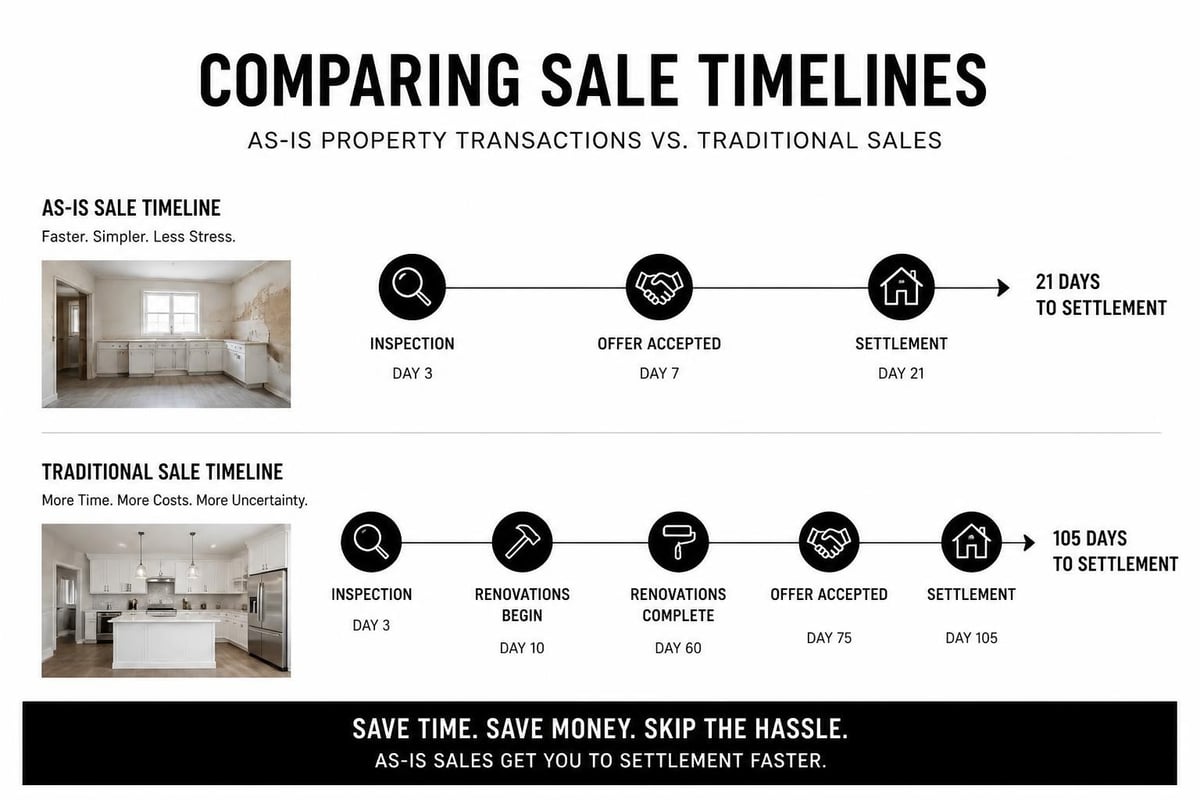
| Preparation time | 1-2 weeks | 2-6 months |
| Upfront costs | Minimal ($2,000-5,000) | $30,000-150,000+ |
| Target buyers | Investors, cash buyers, bargain hunters | Owner-occupiers, move-in ready seekers |
| Sale price | 10-30% below renovated value | Full market value |
| Time to settlement | Often faster (3-6 weeks) | Standard (6-12 weeks) |
| Stress level | Lower | Higher (managing contractors, timeline risk) |
| Certainty | Higher (fewer contingencies) | Lower (renovation delays, cost overruns) |
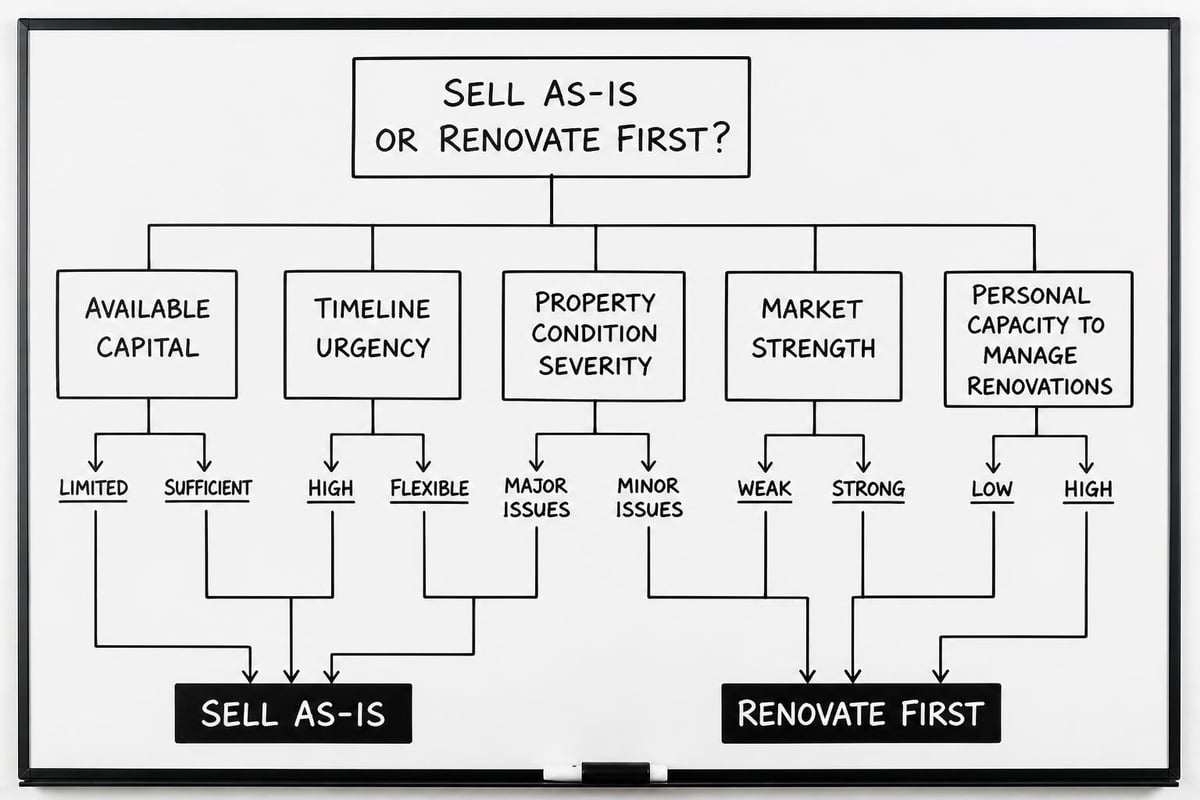
The best choice depends on your priorities: speed and certainty versus maximum price.
Tax Implications When You Sell Homes As Is
As-is sales can have specific tax considerations that differ from traditional sales.
Capital Gains Calculations
Your capital gains tax obligation depends on:
- How long you've owned the property
- Whether it was your principal residence
- Your cost base (purchase price plus capital improvements)
- The final sale price
Selling as-is typically means a lower sale price but also potentially lower capital gains. However, you can't claim renovation costs you didn't incur, which might have offset gains in a traditional sale.
The IRS Publication 523 provides detailed guidance on tax rules when selling homes, though Australian taxation differs-consult the Australian Taxation Office for local requirements.
Deductions and Basis Adjustments
When calculating your taxable gain, you can include:
- Original purchase price
- Stamp duty and purchase costs
- Capital improvements made during ownership (with receipts)
- Selling costs (agent fees, legal fees, marketing)
Cosmetic maintenance doesn't count as capital improvements, but structural work, extensions, and major system upgrades do.
Working with Real Estate Professionals
The right agent makes a significant difference in as-is sales outcomes.
What to Look for in an Agent
Choose an agent who:
- Has experience specifically with as-is and investor sales
- Understands renovation costs and can accurately price your property
- Maintains relationships with property investors and cash buyers
- Communicates honestly about market conditions and realistic expectations
- Provides data-driven market analysis, not just optimistic estimates
Local market knowledge matters enormously. An agent familiar with property sales across western Sydney suburbs understands what buyers in these areas expect and will pay for unrenovated properties.
Commission and Marketing Costs
As-is sales may involve lower sale prices but shouldn't necessarily mean reduced marketing investment:
- Professional photography remains essential
- Online listing presence on major portals drives buyer traffic
- Targeted marketing to investor networks increases qualified interest
- Transparent communication attracts serious buyers
Discuss marketing strategy and commission structure upfront. Some agents charge lower rates for as-is sales; others maintain standard rates but adjust service levels accordingly.
Alternative Exit Strategies to Consider
As-is sales to individual buyers aren't your only option when you need to sell quickly or avoid renovations.
Property Buying Services
Specialised property buying companies offer:
- Guaranteed purchase within days or weeks
- Cash settlements with no finance contingency
- No agent fees or marketing costs
- Simplified process with minimal paperwork
The significant downside is price-these services typically offer 20-35% below market value. They're best for truly urgent situations where speed matters more than price.
Auction vs. Private Treaty
Both sale methods work for as-is properties:
Auction advantages:
- Creates urgency and competition
- Attracts investor buyers comfortable with as-is purchases
- Sets a clear deadline for buyer decisions
- Can achieve strong results in seller's markets
Private treaty advantages:
- Allows more flexible negotiation
- Gives buyers time for thorough due diligence
- Works better in slower markets
- Reduces pressure on sellers
Your market conditions and property type should guide the choice.
Common Mistakes to Avoid
Even straightforward as-is sales can go wrong without careful planning.
Overpricing Based on Potential
The biggest mistake sellers make is pricing as-is properties based on what they could be worth after renovations. Buyers discount for:
- Time and hassle of managing renovations
- Risk that costs exceed estimates
- Opportunity cost of capital tied up in improvements
- Living in a construction zone or managing tenants during work
Price for current condition, not future potential. The next owner will capture the value they create through improvements.
Insufficient Disclosure
Attempting to hide or minimise known defects creates legal liability and ethical problems. Buyers will discover issues during inspections, and undisclosed problems can void sales or trigger lawsuits after settlement.
Complete honesty protects you legally and builds trust with serious buyers who appreciate transparency.
Neglecting Basic Presentation
As-is doesn't mean dirty or cluttered. Buyers struggle to see potential in properties that appear neglected or poorly maintained. Basic cleaning, decluttering, and minor repairs (fixing broken door handles, replacing burnt-out light globes) cost little but significantly improve buyer perception.
Accepting the First Low Offer
Desperate sellers sometimes accept the first offer without testing the market. Unless you face immediate foreclosure or other urgent deadline, allow adequate marketing time to attract multiple interested buyers. Competition drives better prices even for as-is properties.
Market Conditions Favouring As-Is Sales
Certain market environments make as-is sales particularly advantageous.
Strong Seller's Markets
When demand exceeds supply and properties sell quickly, as-is homes attract strong interest because:
- Buyers have limited options and can't be as selective
- Renovation expertise can create significant value in tight markets
- Lower entry prices appeal to buyers priced out of renovated homes
- Investors compete actively for opportunities
High Construction Costs
When renovation costs escalate due to material shortages or labour scarcity, some buyers prefer to renovate gradually rather than pay premium prices for recently updated homes. This creates opportunity for as-is sellers to find buyers willing to tackle improvements themselves.
Areas with Strong Investor Activity
Suburbs with high investor ownership and rental demand naturally attract more buyers comfortable with as-is purchases. Padstow, Revesby, and Panania's strong rental markets and investor interest create favourable conditions for unrenovated property sales.
Timing Your As-Is Sale
Strategic timing can improve outcomes even when you're not making improvements.
Seasonal Considerations
Australian property markets traditionally:
- Strengthen in spring (September-November) when buyer activity peaks
- Slow in summer (December-January) during holiday periods
- Rebuild in autumn (March-May) with motivated buyers
- Quieten in winter (June-August) though serious buyers remain active
As-is properties may perform better in strong seasons when buyer competition is highest, but winter can attract serious investors less influenced by emotional factors like garden presentation.
Economic Cycle Positioning
Interest rate environments affect buyer capacity and confidence:
- Rising rates reduce borrowing power, making lower-priced as-is properties relatively more attractive
- Falling rates increase buyer capacity, potentially supporting higher as-is prices
- Economic uncertainty drives some buyers toward value purchases requiring sweat equity
- Strong employment markets give buyers confidence to tackle renovation projects
Monitor economic indicators and local market conditions when deciding your listing timing.
Selling your home as-is offers a practical path forward when circumstances don't allow for renovation or when quick settlement matters more than achieving absolute maximum price. Whether you're facing time pressures, financial constraints, or simply want to avoid renovation complexity, understanding the process, pricing appropriately, and working with experienced professionals ensures the best possible outcome. Real estate sales agent Steven Cirillo brings extensive market knowledge across Padstow, Revesby, and Panania to help sellers navigate as-is transactions with honest communication, accurate pricing, and strategic marketing that attracts qualified buyers. If you're considering an as-is sale and want expert guidance tailored to your specific situation, contact Steven Cirillo to discuss your options and develop a strategy that delivers results while meeting your timeline and goals.