
The landscape of us real estate sales continues to evolve in 2026, shaped by shifting economic conditions, changing buyer preferences, and persistent market challenges. Understanding the dynamics of property transactions across the United States provides valuable context for buyers, sellers, and real estate professionals worldwide. Whether you're monitoring international investment opportunities or simply interested in how global property markets influence local conditions, the trends emerging from America's housing sector offer important lessons for navigating property sales in any market.
Understanding Current Market Conditions
The us real estate sales environment has experienced significant volatility over recent years, with 2025 marking a particularly challenging period for the industry. Home sales reached their lowest level in 14 years, creating a market characterised by reduced transaction volumes and cautious buyer sentiment. This contraction reflects broader economic pressures, including elevated mortgage rates, affordability challenges, and shifting demographic trends that have fundamentally altered purchasing patterns.
Market participants have witnessed substantial changes in how properties are bought and sold. The traditional spring selling season has become less predictable, with post-pandemic shifts affecting the seasonality of real estate transactions across different regions. These patterns demonstrate how external factors can dramatically reshape established market rhythms, requiring agents and sellers to adapt their strategies accordingly.
Inventory and Supply Dynamics
One of the most significant factors influencing us real estate sales has been the persistent inventory shortage in many markets. Limited housing stock has created competitive conditions for buyers whilst simultaneously constraining overall transaction volumes. The normalisation of market conditions observed through 2025 suggests gradual improvement, though many regions continue to experience supply constraints that elevate prices and extend time-to-sale metrics.
Supply challenges stem from multiple sources:
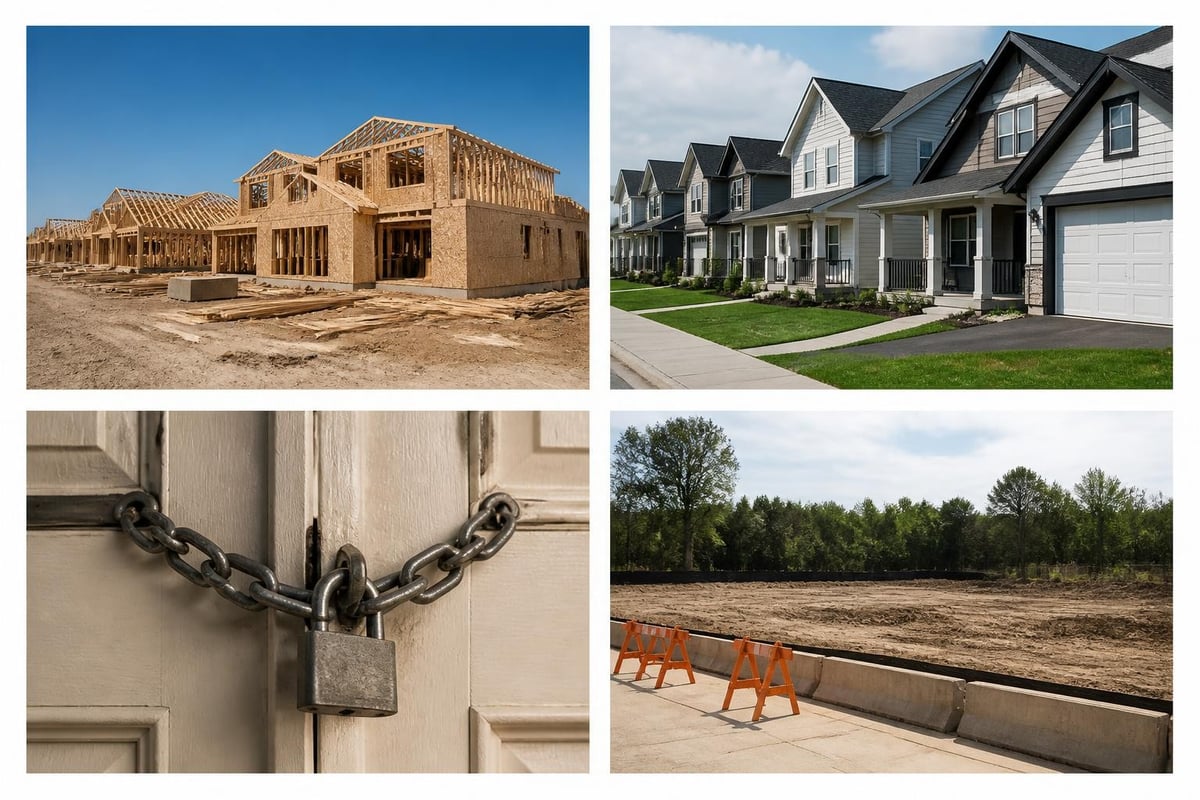
- Reduced new construction activity during economic uncertainty
- Homeowners locked into low-rate mortgages reluctant to sell
- Regulatory constraints limiting development in high-demand areas
- Rising construction costs impacting builder profitability
- Land availability restrictions in established metropolitan markets
These supply-side pressures have created a complex environment where property marketing strategies must emphasise competitive positioning and unique value propositions to attract serious buyers.
Pricing Trends and Value Assessment
Median sale prices across us real estate sales have demonstrated remarkable resilience despite transaction volume declines. ATTOM’s comprehensive data analysis reveals that whilst sales velocity decreased, property values in many markets maintained strength or experienced modest growth. This price stability reflects the fundamental supply-demand imbalance, where limited inventory supports valuations even as fewer transactions occur.
Understanding property valuation in this context requires sophisticated analysis beyond simple comparative approaches. Professional property appraisals and market assessments provide essential foundations for successful sales, combining recent comparable data with nuanced understanding of local market conditions, buyer preferences, and emerging trends that influence pricing power.
| Pricing Factor | Impact on Sales | Strategic Response |
|---|---|---|
| Elevated interest rates | Reduced buyer purchasing power | Emphasise value proposition and total cost benefits |
| Limited inventory | Upward price pressure | Strategic pricing to maximise competitive tension |
| Economic uncertainty | Cautious buyer behaviour | Transparent communication and market education |
| Regional variation | Inconsistent performance | Localised market analysis and positioning |
Regional Performance Variations
The us real estate sales landscape demonstrates significant regional divergence, with some markets experiencing robust activity whilst others face sustained challenges. Sunbelt regions have generally outperformed traditional northeastern markets, driven by demographic migration, remote work flexibility, and relative affordability. Understanding these geographic patterns helps contextualise broader market trends and identifies where opportunities may emerge.
Australian property professionals can draw parallels to regional variations within domestic markets, where capital cities, regional centres, and coastal communities each exhibit distinct characteristics. The lesson from American market diversity emphasises the importance of hyperlocal expertise and market-specific strategies rather than broad, generalised approaches.
Transaction Volume and Market Activity
Perhaps the most striking aspect of recent us real estate sales has been the sustained reduction in transaction volumes. PBS NewsHour reported that 2025 sales remained at a 30-year low, reflecting fundamental shifts in market dynamics beyond typical cyclical patterns. This reduced activity creates challenges for real estate professionals who rely on transaction volume for business sustainability.
The implications of reduced transaction velocity extend throughout the property ecosystem:
- Mortgage lenders experience decreased origination volumes and revenue pressure
- Title companies face similar volume-related challenges affecting operational capacity
- Home improvement retailers see reduced demand from new homeowners undertaking renovations
- Real estate agents must adapt business models to succeed with fewer total transactions
- Property developers recalibrate project pipelines based on absorption rate realities
For real estate professionals navigating challenging markets, the emphasis shifts from volume-based approaches to value-focused strategies that prioritise service quality, client relationships, and superior outcomes over transaction quantity.
Commercial Real Estate Perspectives
Whilst residential properties dominate discussions of us real estate sales, the commercial sector provides additional context for understanding broader market forces. Commercial real estate transaction analysis through Q4 2025 revealed sector-specific challenges, with office properties facing particular headwinds whilst industrial and multifamily segments demonstrated relative strength. These patterns reflect evolving business practices, including remote work adoption and e-commerce growth.
Commercial market trends often presage residential developments, as employment patterns, business investment, and economic confidence influence household formation and housing demand. Monitoring commercial activity provides forward-looking indicators that savvy residential market participants can leverage for strategic advantage.

Strategic Approaches for Sellers
Navigating the us real estate sales environment successfully requires sellers to adopt sophisticated strategies that acknowledge current market realities. Simply listing a property and waiting for offers no longer suffices in markets characterised by selective buyers and extended sales cycles. Instead, comprehensive approaches that maximise property appeal, strategic pricing, and targeted marketing deliver superior results.
Preparation remains paramount. Properties presented in optimal condition consistently outperform those requiring buyer imagination or investment. Professional staging, high-quality photography, and attention to presentation details create powerful first impressions that drive buyer interest and competitive offers.
Pricing strategy demands precision. Overpricing in challenging markets extends time-on-market metrics and ultimately depresses final sale prices as properties become stigmatised. Conversely, strategic pricing that reflects genuine market conditions whilst positioning for competitive tension generates buyer activity and often produces above-expectation results.
Marketing sophistication differentiates outcomes. Digital marketing dominates modern property sales, with buyers conducting extensive online research before attending inspections. Comprehensive campaigns leveraging professional photography, video content, social media advertising, and targeted database marketing create the exposure necessary to attract qualified buyers.
The Auction Alternative
Auction campaigns remain particularly effective in competitive markets where generating buyer competition is essential for achieving premium results. The us real estate sales market traditionally favours negotiated sales, but Australian-style auction approaches offer valuable lessons in creating urgency and maximising competitive tension amongst serious buyers.
The auction methodology succeeds by establishing defined timelines, transparent processes, and competitive dynamics that encourage buyers to present their strongest offers. For sellers willing to commit to the approach and work with experienced agents, auctions frequently deliver outstanding outcomes even in challenging market conditions.
Buyer Behaviour and Decision-Making
Understanding how buyers approach us real estate sales provides critical insights for sellers and agents developing effective strategies. Today's buyers are remarkably well-informed, conducting extensive independent research and arriving at inspections with detailed knowledge about properties, neighbourhoods, and market conditions. This sophistication demands transparency and expertise from real estate salespeople who must provide genuine value beyond basic property information.
Buyer decision-making processes have lengthened as economic uncertainty and significant financial commitments drive cautious behaviour. Multiple inspections, detailed due diligence, and extended contemplation periods have become standard, requiring patient, consultative approaches from agents guiding clients through purchase decisions.
| Buyer Priority | Influence Level | Seller Response Strategy |
|---|---|---|
| Location convenience | Very High | Emphasise proximity to amenities, transport, schools |
| Property condition | High | Invest in presentation and address maintenance issues |
| Price competitiveness | Very High | Strategic pricing based on accurate market assessment |
| Future value potential | Medium | Highlight growth drivers and investment fundamentals |
| Emotional connection | High | Create welcoming environments that inspire lifestyle vision |
First-Time Buyer Challenges
First-time participants in us real estate sales face particular obstacles in 2026, with affordability constraints and competitive conditions creating significant barriers to homeownership. Elevated property prices relative to median incomes, substantial deposit requirements, and complex financing processes can overwhelm those new to property transactions. Supporting first-time buyers requires patient guidance, clear communication, and advocacy throughout the purchase journey.
The challenges facing first-time buyers ultimately impact overall market dynamics, as reduced entry-level activity constrains the move-up market and limits transaction velocity across all price segments. Addressing affordability and accessibility concerns remains essential for long-term market health and sustainable growth.

Technology and Innovation in Property Sales
The us real estate sales industry continues embracing technological innovation that transforms how properties are marketed, evaluated, and transacted. Virtual tours, 3D property models, and augmented reality applications enable remote property exploration, expanding buyer reach and streamlining the inspection process. These technologies proved essential during pandemic-related restrictions and have permanently altered buyer expectations.
Data analytics and artificial intelligence are revolutionising property valuation and market analysis. Advanced algorithms can now forecast price indices using satellite data and news sentiment, providing unprecedented granularity in market understanding. Whilst human expertise remains essential for contextualising data and understanding qualitative factors, these technological tools enhance decision-making accuracy and market transparency.
Digital transaction platforms streamline administrative processes, reducing paperwork burdens and accelerating settlement timelines. Electronic signatures, cloud-based document management, and integrated communication systems create efficiency gains that benefit all transaction participants whilst reducing errors and delays.
Market Outlook and Future Trends
Forecasting future us real estate sales requires acknowledging significant uncertainty whilst identifying probable trends based on current trajectories. Economic forecasts for housing suggest gradual improvement through 2026, with modest transaction volume increases and continued price stability in most markets. Interest rate movements will significantly influence these projections, as mortgage affordability directly impacts buyer capacity and market activity.
Demographic trends will shape long-term demand patterns, with millennial household formation and baby boomer downsizing creating distinct market segments with different needs and preferences. Properties that accommodate evolving lifestyle preferences, including home office functionality, outdoor spaces, and flexible layouts, will likely command premium positioning.
Sustainability and energy efficiency are emerging as significant value drivers, particularly for younger buyers prioritising environmental impact and operational costs. Properties featuring solar installations, efficient climate control systems, and sustainable materials increasingly attract buyer interest and justify premium pricing.
The ongoing evolution of work patterns, with hybrid and remote arrangements becoming permanent for many professionals, continues reshaping geographic preferences and property requirements. Markets offering lifestyle amenities, affordability advantages, and connectivity infrastructure benefit from these trends at the expense of traditional central business district locations.
Professional Expertise and Client Outcomes
Success in us real estate sales, whether as buyer or seller, increasingly depends on partnering with knowledgeable professionals who combine market expertise, strategic thinking, and client advocacy. The complexity of modern property transactions, regulatory requirements, and market dynamics makes expert guidance not merely beneficial but essential for achieving optimal outcomes.
Experienced agents bring multiple critical capabilities to client engagements. Deep local market knowledge enables accurate pricing assessments and strategic positioning that maximise competitive advantage. Negotiation expertise ensures clients secure favourable terms whilst maintaining productive relationships with transaction counterparties. Marketing sophistication generates the exposure and buyer interest necessary for achieving premium results.
Perhaps most importantly, skilled agents provide objective counsel during inherently emotional processes. Whether helping buyers make confident decisions or guiding sellers through challenging negotiations, professional perspective and experience create value that far exceeds commission costs.
The Australian property market shares many characteristics with us real estate sales whilst maintaining distinct local features. Working with agents who understand both global trends and hyperlocal conditions positions clients for success regardless of market challenges. Quality representation transforms property transactions from stressful ordeals into positive experiences that deliver exceptional financial outcomes and lasting satisfaction.
The us real estate sales market provides valuable insights into how property markets navigate economic challenges, technological change, and evolving buyer preferences. Whether you're considering selling your home, exploring investment opportunities, or simply planning for future property decisions, understanding these dynamics positions you for success. Real estate sales agent Steven Cirillo combines extensive industry experience with detailed local market knowledge across Padstow, Revesby, and Panania to deliver exceptional results for buyers and sellers alike. His honest communication style and strategic approach ensure clients receive the expert guidance necessary to achieve their property goals with confidence.