
The residential property market in Australia operates through a network of licensed professionals who facilitate transactions between buyers and sellers. Among these professionals, property brokers play a distinct role that many homeowners and buyers find confusing. Understanding what property brokers do, how they differ from traditional real estate agents, and when their services might benefit your transaction can significantly impact your property journey. Whether you're selling your family home in Revesby, purchasing an investment property in Padstow, or navigating your first home purchase in Panania, knowing the landscape of property professionals ensures you make informed decisions that protect your interests and maximise your outcomes.
Understanding Property Brokers in Australian Real Estate
Property brokers occupy a unique position within the Australian real estate industry. While the term is often used interchangeably with "real estate agent" in casual conversation, there are important distinctions that affect how these professionals operate and serve their clients.
In most Australian states and territories, a broker holds a higher level of licensing than a standard sales agent. This elevated credential typically requires additional education, more extensive industry experience, and demonstrates a deeper understanding of real estate law, finance, and market dynamics. Brokers can operate their own agencies, employ agents under their licence, and take on greater legal responsibility for transactions.
Licensing and Qualifications
The pathway to becoming a property broker involves several steps beyond basic agent registration:
- Certificate IV in Real Estate Practice (foundational requirement)
- Minimum experience period working as a licensed agent (typically 2-3 years depending on jurisdiction)
- Additional coursework in property management, agency operations, and trust accounting
- Character assessment and financial probity checks
- Continuing professional development requirements to maintain licensure
These requirements exist to ensure brokers possess the expertise necessary to manage complex transactions, supervise other agents, and maintain the financial trust accounts that hold clients' deposits and settlement funds.
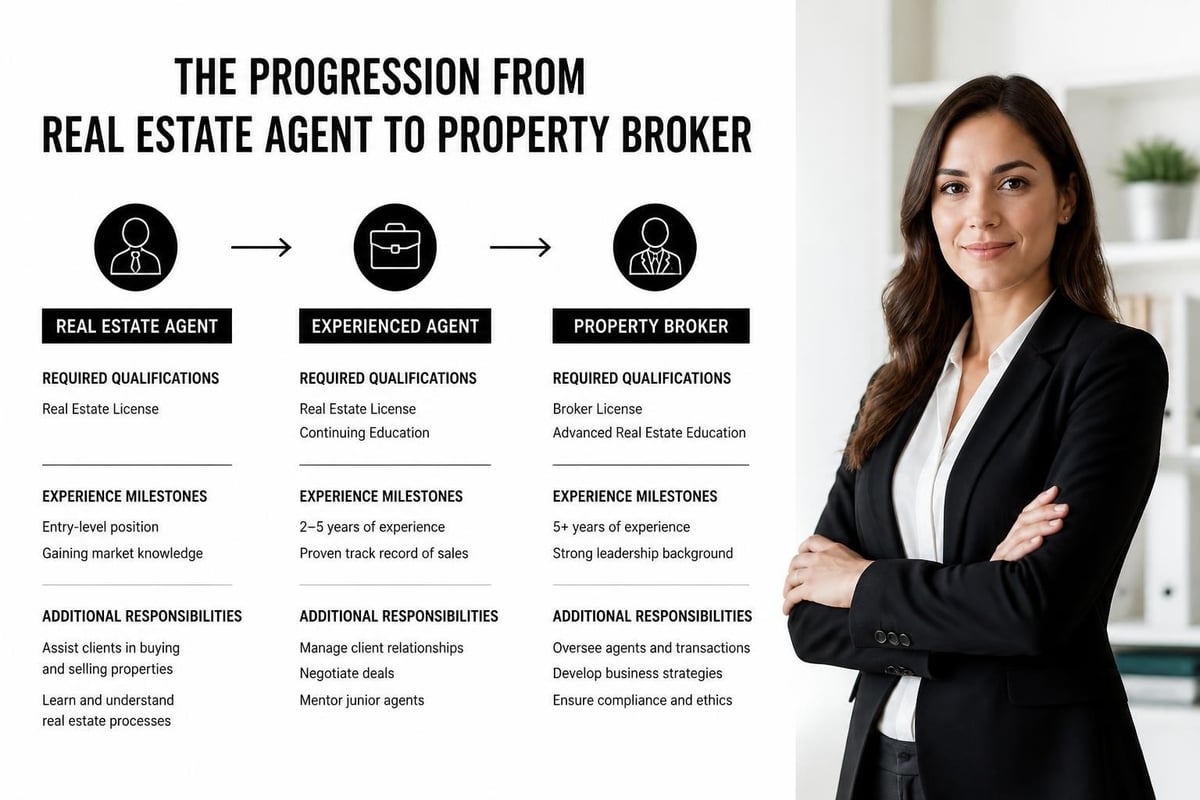
State regulations vary considerably. In New South Wales, for instance, the distinction between agent and broker is less pronounced in terminology, with the focus on "agent's licence" versus "certificate of registration." However, the principle remains: those running agencies and taking ultimate responsibility for transactions require more extensive credentials than frontline sales representatives.
The Broker's Role in Residential Property Transactions
Property brokers perform multiple functions throughout the buying and selling process, though their involvement varies based on the brokerage model and the specific services engaged.
Market Analysis and Pricing Strategy
One of the most critical services brokers provide is accurate property valuation. Using comparable sales data, current market conditions, and deep local knowledge, brokers help sellers establish realistic price expectations. This analysis considers factors including:
| Valuation Factor | Impact on Price |
|---|---|
| Recent comparable sales | Primary benchmark for current market value |
| Property condition and improvements | Can add 5-15% premium for quality renovations |
| Location and street appeal | Varies significantly by suburb and street |
| Market sentiment and buyer demand | Affects negotiation leverage and timeframe |
| Unique features or limitations | Either premium or discount depending on buyer pool |
According to recent research on broker incentives and market outcomes, how property brokers structure their compensation and advice can significantly influence transaction results. Brokers who align their recommendations with genuine market evidence rather than securing quick sales tend to achieve better outcomes for clients.
Marketing and Buyer Engagement
Professional brokers develop comprehensive marketing campaigns tailored to each property's target audience. This involves coordinating photography, copywriting, digital advertising, and strategic placement across property portals where buyers actively search.
The most effective brokers don't simply list properties and wait for enquiries. They actively engage their buyer networks, reach out to qualified prospects, and create competitive tension that drives stronger offers. This proactive approach separates exceptional brokers from those who take a passive order-taking stance.
Negotiation and Transaction Management
Perhaps the most valuable skill brokers bring is expert negotiation. Managing multiple parties, navigating emotional decision-making, and structuring deals that satisfy both buyers and sellers requires experience and composure that only comes from handling hundreds of transactions.
Throughout the negotiation process, brokers:
- Present offers clearly with full context about buyer position and market conditions
- Advise on counter-offers based on market evidence and buyer behaviour signals
- Manage due diligence periods including building inspections and contract reviews
- Coordinate with solicitors to ensure legal compliance and smooth settlement
- Handle unexpected issues that arise between contract exchange and settlement
This end-to-end transaction management provides sellers with peace of mind and buyers with professional guidance through what can be an overwhelming process.
Choosing the Right Property Broker for Your Needs
Not all property brokers operate identically, and selecting the right professional for your specific situation requires careful evaluation beyond simply picking the agent with the most local listings.
Experience and Track Record
While years in the industry matter, relevant local experience matters more. A broker with deep knowledge of Revesby, Padstow, and Panania markets understands buyer demographics, price sensitivities, and which property features resonate most strongly in these suburbs. This hyperlocal expertise translates directly into more accurate pricing, better-targeted marketing, and stronger negotiation outcomes.
Ask potential brokers specific questions:
- How many properties have you sold in this specific suburb in the past 12 months?
- What was your average days on market compared to the suburb median?
- Can you provide references from recent sellers in similar properties?
- What percentage of your listings sell above the initial price guide?
The answers reveal whether a broker's claims align with verifiable performance data.
Communication Style and Availability
The relationship between client and broker spans weeks or months, making communication compatibility essential. Some sellers prefer daily updates and detailed explanations; others want concise summaries at key milestones. The best brokers adapt their communication style to client preferences while ensuring critical information never gets overlooked.
During initial consultations, assess whether the broker:
- Listens actively to your concerns and objectives
- Explains strategies in clear, jargon-free language
- Responds promptly to enquiries
- Sets realistic expectations rather than making inflated promises
- Demonstrates genuine interest in your specific situation
These indicators predict how the working relationship will function under the pressure of active negotiations and tight timelines.

Marketing Approach and Resources
The digital transformation of real estate has dramatically changed how properties reach potential buyers. Forward-thinking brokers leverage technology while maintaining the personal touch that builds buyer confidence.
Evaluate a broker's marketing capabilities:
- Professional photography and videography that showcases properties at their best
- Multi-channel digital advertising including social media, search engines, and property portals
- Database marketing to qualified buyers actively seeking properties in the area
- Open home management that creates urgency and competitive atmosphere
- Follow-up systems that convert enquiries into inspections and offers
Contemporary real estate leadership increasingly emphasises technology adoption while maintaining the human expertise that sophisticated transactions demand. The most effective brokers blend both elements seamlessly.
Commission Structures and Broker Compensation
Understanding how property brokers earn their fees helps sellers evaluate whether the services justify the cost and ensures transparency throughout the engagement.
Standard Commission Models
Australian property brokers typically charge commissions ranging from 1.5% to 3.0% of the sale price, though rates vary by location, property value, and competitive dynamics. Some brokers offer tiered structures where rates decrease for higher-value properties, while others use flat-rate pricing regardless of sale price.
| Commission Type | Typical Rate | Best For |
|---|---|---|
| Percentage-based | 2.0-2.5% of sale price | Standard residential sales |
| Tiered percentage | 2.5% first $500k, 1.5% above | Higher-value properties |
| Flat fee | Fixed dollar amount | Sellers wanting cost certainty |
| Performance-based | Lower base + premium above threshold | Sellers confident in property value |
Recent examination of commission practices suggests market forces and consumer awareness are creating more diverse compensation models. Brokers who clearly explain their fee structures and demonstrate value through superior marketing and negotiation services justify their commissions more effectively than those relying solely on traditional percentage rates.
The National Bureau of Economic Research analysis of broker compensation highlights how commission structures influence broker behaviour and ultimately affect consumer outcomes, demonstrating the importance of aligning broker incentives with client objectives.
Negotiating Broker Fees
While many sellers accept the first commission rate offered, broker fees are negotiable. The key is approaching negotiations professionally and understanding what drives pricing:
- Marketing budget inclusion: Some commissions cover extensive marketing; others charge separately
- Exclusive versus open listing: Exclusive agreements often command lower rates due to guaranteed engagement
- Market conditions: In strong seller's markets, brokers may accept lower commissions due to faster turnover
- Property complexity: Unique or challenging properties may justify premium rates
Successful fee negotiations focus on value exchange rather than simply seeking the lowest rate. A broker charging 2.5% who achieves a sale price 5% above a discount broker's likely outcome delivers significantly better financial results despite the higher commission.
When Property Brokers Add Greatest Value
While brokers serve sellers and buyers across all property types and market conditions, certain situations particularly benefit from experienced broker involvement.
Complex Property Sales
Properties with unique characteristics, title complications, or development potential require brokers who understand how to position complexity as opportunity rather than liability. Heritage-listed homes, properties with multiple dwellings, or sites with subdivision potential need marketing that reaches specialist buyers who recognise and pay for these features.
Brokers experienced in these niches provide:
- Targeted buyer identification beyond general property portals
- Specialist marketing language that speaks to sophisticated investors or developers
- Due diligence coordination for surveys, council regulations, and feasibility studies
- Contract structuring that addresses unique conditions and contingencies
Competitive Market Conditions
In markets with high inventory and moderate buyer demand, broker expertise becomes the differentiating factor between properties that sell quickly at strong prices and those that languish. Professional brokers create urgency through strategic pricing, competitive bidding processes, and skillful buyer management.
For sellers in suburbs like Padstow, Revesby, and Panania where multiple comparable properties may be available simultaneously, working with a broker who provides Residential Property Sales expertise and proven local results can mean the difference between achieving your target price and accepting a compromised outcome.
First Home Buyer Guidance
For buyers entering the property market for the first time, the complexity of financing, contracts, inspections, and negotiations can be overwhelming. While buyers don't typically pay broker commissions directly in Australian residential sales, engaging a buyer's advocate (a broker representing buyer interests) provides valuable guidance through the purchase process.
Brokers working with first home buyers help navigate:
- Budget setting based on genuine borrowing capacity and total acquisition costs
- Suburb selection balancing affordability, lifestyle preferences, and growth potential
- Property assessment identifying quality homes versus those with hidden maintenance issues
- Offer strategy in competitive situations where multiple buyers pursue the same property
- Contract review ensuring terms protect buyer interests and allow appropriate due diligence

Regulatory Framework and Consumer Protections
Property brokers operate within a comprehensive regulatory framework designed to protect consumers and maintain industry standards. Understanding these protections helps buyers and sellers engage confidently with licensed professionals.
Licensing and Oversight
Each Australian state and territory maintains a regulatory body responsible for licensing property brokers and investigating consumer complaints. In New South Wales, NSW Fair Trading administers the Property and Stock Agents Act and maintains the public register of licensed professionals.
Key consumer protections include:
- Mandatory professional indemnity insurance covering errors and negligent advice
- Fidelity fund contributions protecting consumer deposits held in trust
- Continuing education requirements ensuring brokers maintain current knowledge
- Complaint investigation processes with disciplinary powers for misconduct
- Trust account auditing protecting client funds from misappropriation
Regulatory frameworks like TILA-RESPA integrated disclosures in other jurisdictions illustrate how consumer protection regulations require transparent disclosure of all costs and broker compensation, similar principles to those embedded in Australian real estate legislation.
Agency Agreements and Disclosure Requirements
Before engaging a property broker, sellers sign an agency agreement that legally defines the relationship, commission structure, marketing budget, campaign duration, and termination conditions. Australian law requires these agreements to clearly disclose:
- Commission rate and calculation method (percentage, flat fee, or tiered structure)
- Marketing costs and whether they're included in commission or charged separately
- Agreement duration and notice periods for termination
- Broker's obligations regarding reporting, advertising, and client communication
- Conflict of interest disclosures if the broker or related parties might purchase the property
State-level regulatory frameworks continue evolving to address emerging industry practices, technology impacts, and consumer protection needs, with Australian regulators similarly adapting standards to contemporary market realities.
The Future of Property Brokers in Australian Real Estate
The residential property industry faces significant transformation driven by technology, changing consumer expectations, and evolving business models. Property brokers who adapt to these shifts while maintaining the personal expertise that complex transactions demand will continue thriving.
Technology Integration
Digital tools now enable brokers to offer services that were impossible a decade ago:
- Virtual property tours allowing interstate and international buyers to inspect properties remotely
- Automated valuation models providing instant preliminary price guidance
- Customer relationship management systems ensuring no buyer enquiry or follow-up opportunity is missed
- Digital contract execution streamlining paperwork and reducing settlement timeframes
- Data analytics platforms identifying buyer behaviour patterns and optimal marketing strategies
These technologies enhance rather than replace broker expertise. The interpretation of data, the emotional intelligence required for negotiation, and the strategic thinking that positions properties effectively remain distinctly human skills.
Service Specialisation
As the property market becomes more sophisticated, brokers increasingly specialise in specific niches-whether geographic areas, property types, or client demographics. This specialisation allows deeper expertise and more targeted service delivery.
Brokers focusing on specific suburbs like Revesby, Padstow, and Panania develop unmatched knowledge of local buyer preferences, price sensitivities, and market cycles. This hyperlocal focus delivers better outcomes than generalist approaches spread across broader regions.
Transparency and Consumer Expectations
Today's property sellers and buyers expect greater transparency around broker services, fees, and performance metrics. Brokers who proactively share market data, explain their strategies clearly, and demonstrate measurable results build stronger client relationships and earn more referrals.
The shift toward transparency extends to commission structures, with more brokers offering alternative fee models beyond traditional percentage-based rates. Performance-based pricing, flat fees for specific services, and unbundled service options give consumers more choice and control over their broker engagement.
Navigating the residential property market successfully requires understanding the role property brokers play, how to evaluate their credentials and approach, and when their expertise delivers the greatest value. Whether you're selling a cherished family home or purchasing your first property, working with the right professional makes the entire experience smoother and more financially rewarding. For sellers and buyers across Padstow, Revesby, and Panania seeking honest advice, strategic marketing, and proven results, Steven Cirillo combines deep local market knowledge with a detail-oriented approach that consistently delivers exceptional outcomes.